
AKHNATEN — Philip Glass
LA Opera, February 28–March 22, 2026
Yann Perreau
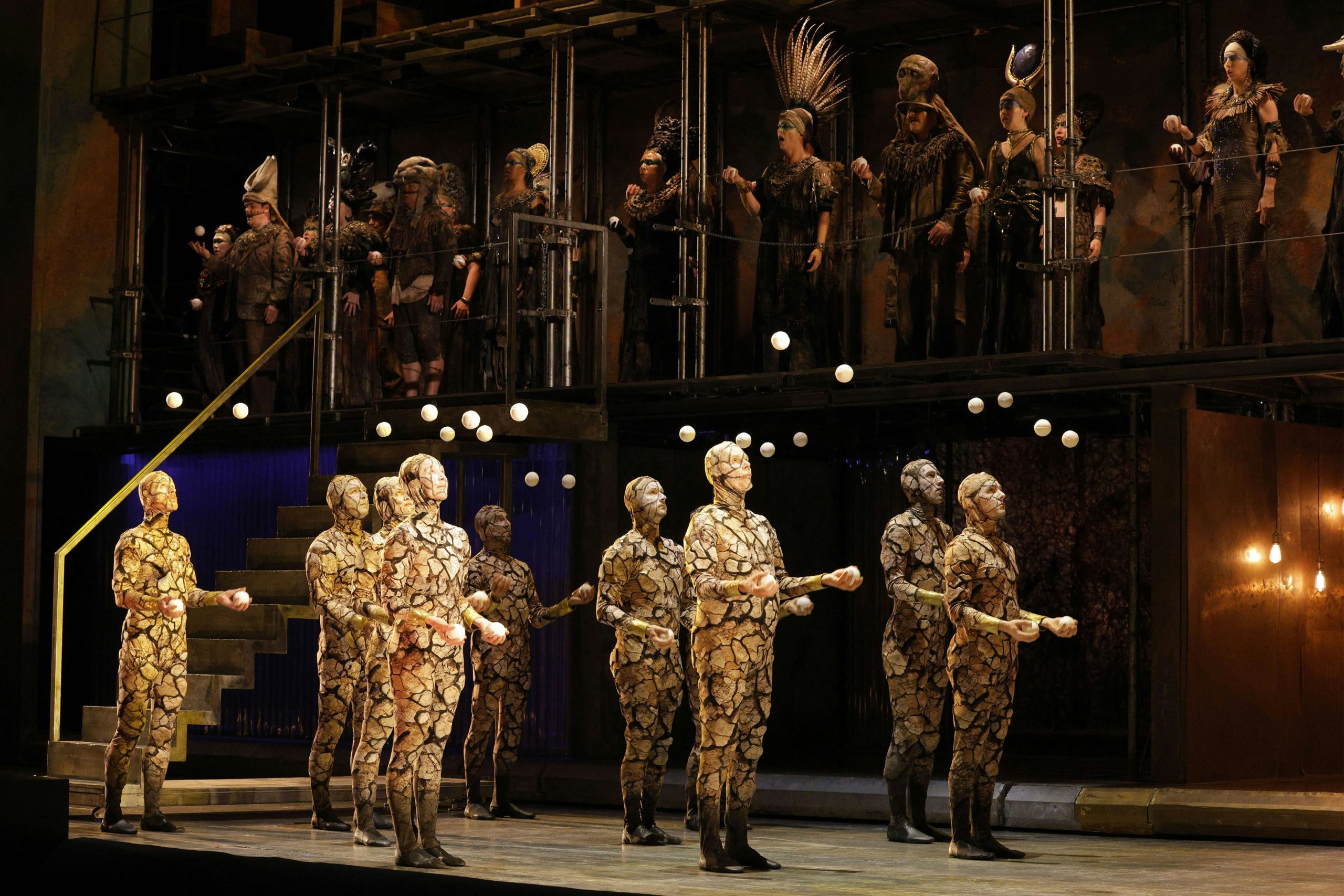
When the curtain rises on the opera’s first act, we discover a three-story palace populated by demigods—heroes, servants, princes, and priests. We recognize the seven gods of ancient Egypt through their animal masks (bird, snake, wolf, etc.). The sounds of percussion resonate frenetically, accelerating as the characters—singing lyrics adapted from The Book of the Dead—mark the death of their beloved pharaoh, Amenhotep III, accompanying him on his final journey into the afterlife.
Welcome to Akhnaten, the final part of the “portrait trilogy” composed by Philip Glass in the 1970s and 80s. Einstein on the Beach explored science, Satyagraha addressed Gandhi and politics, and Akhnaten turned to religion.
The son of Amenhotep III and father of Tutankhamun, Akhnaten was the pharaoh who revolutionized Egyptian culture and belief by introducing a form of monotheism. He suppressed the worship of the old gods and built a city dedicated to a single deity, the sun god Aten. His reign lasted only seventeen years. He married Nefertiti, and after his death, his legacy was almost entirely erased. It is only thanks to later archaeological discoveries that we are aware of his existence at all.
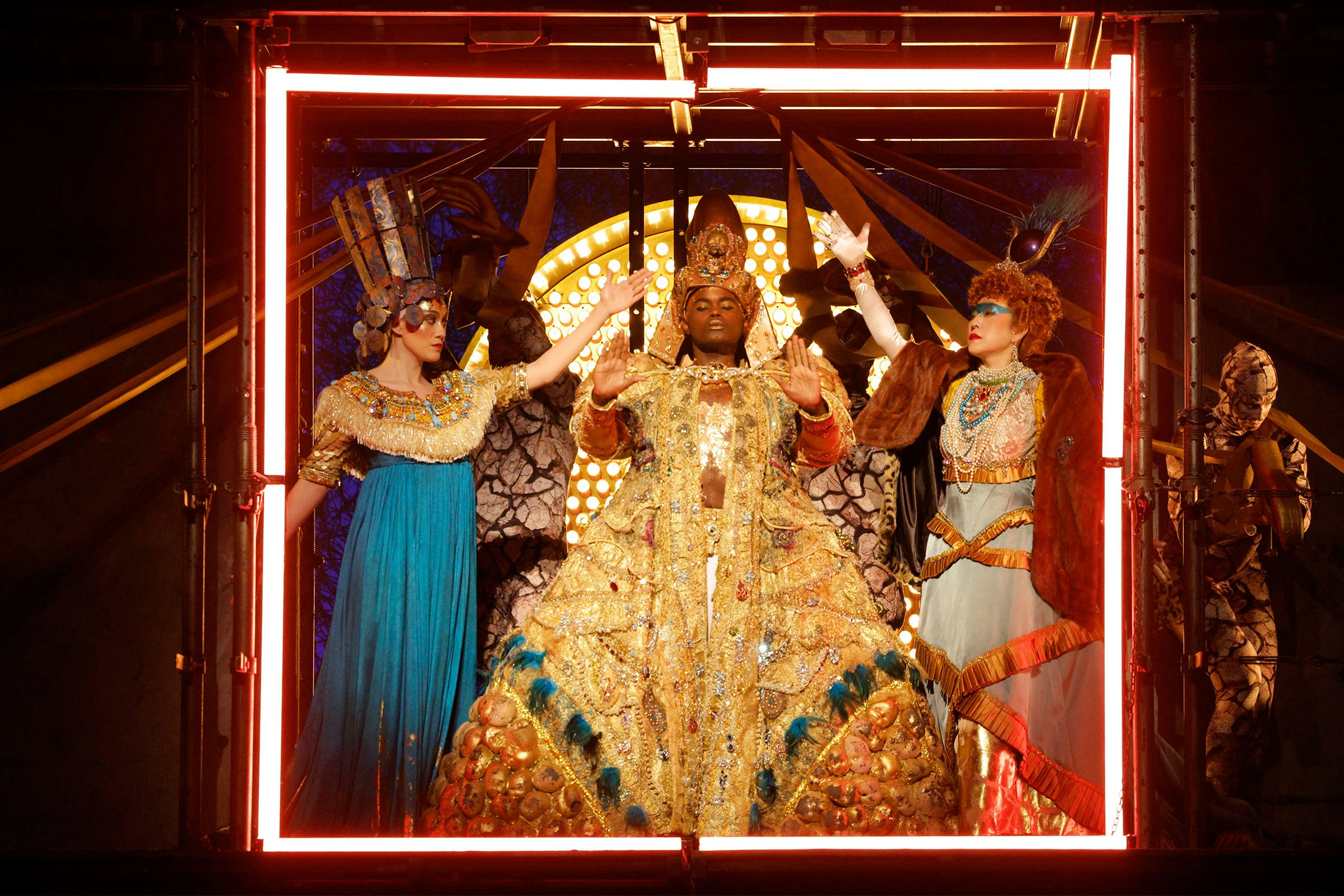
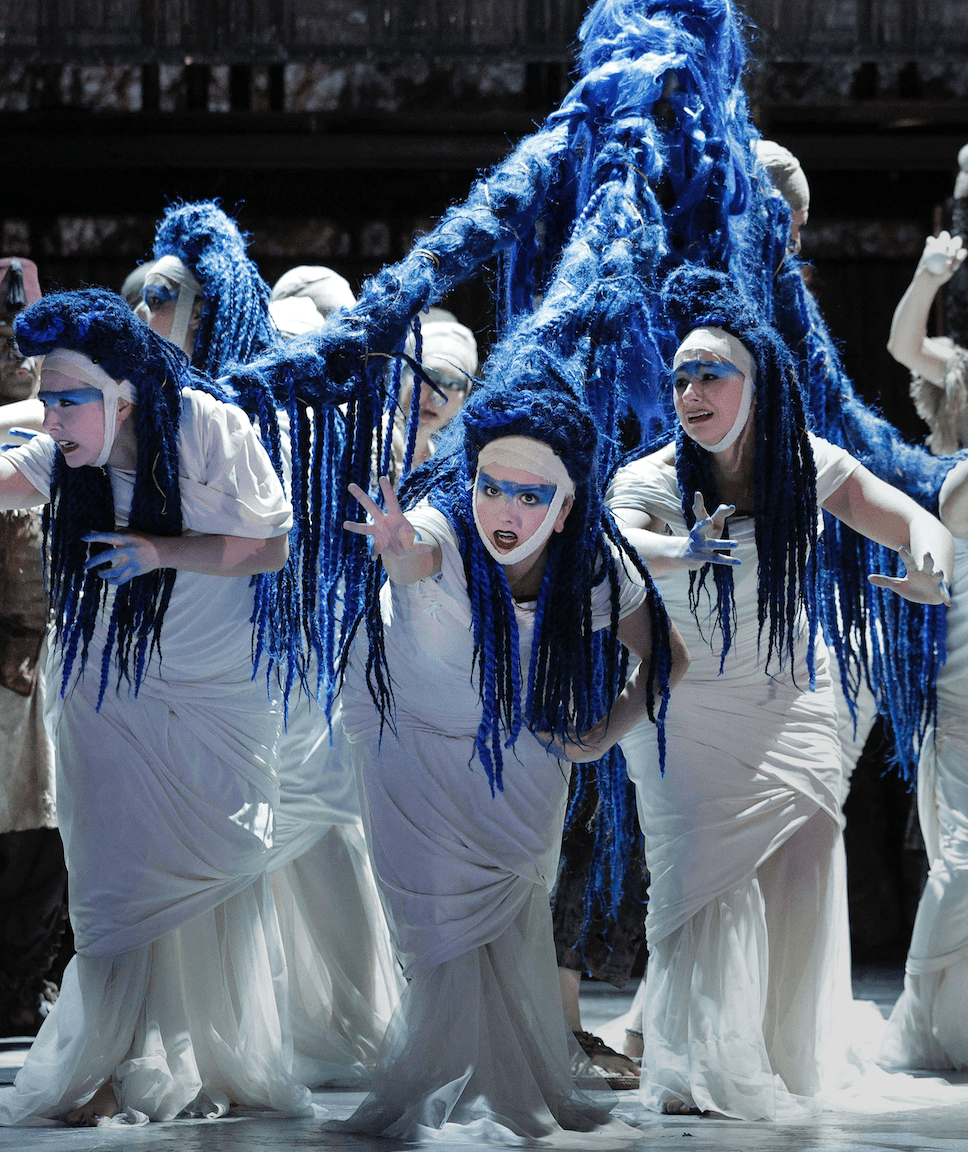
For Glass and his LA Opera collaborators—Tom Pye handled the scenic design and Kevin Pollard designed the costumes—this lack of historical information is precisely what continues to make the subject so compelling: it opens a vast space for imagination and speculation. Rather than constructing a classical, plot-driven narrative, Glass created a series of tableaux vivants almost Baudelairian in their languid sensuality and gilded decadence—bodies draped in gold, encrusted with jewels, and charged with an undercurrent of eroticism. This is one of the opera’s most striking aspects. It would have been reductive, even Eurocentric, to impose a Western narrative structure onto ancient Egypt. As we know from hieroglyphs alone, the conception of time in this culture was fundamentally different than ours.
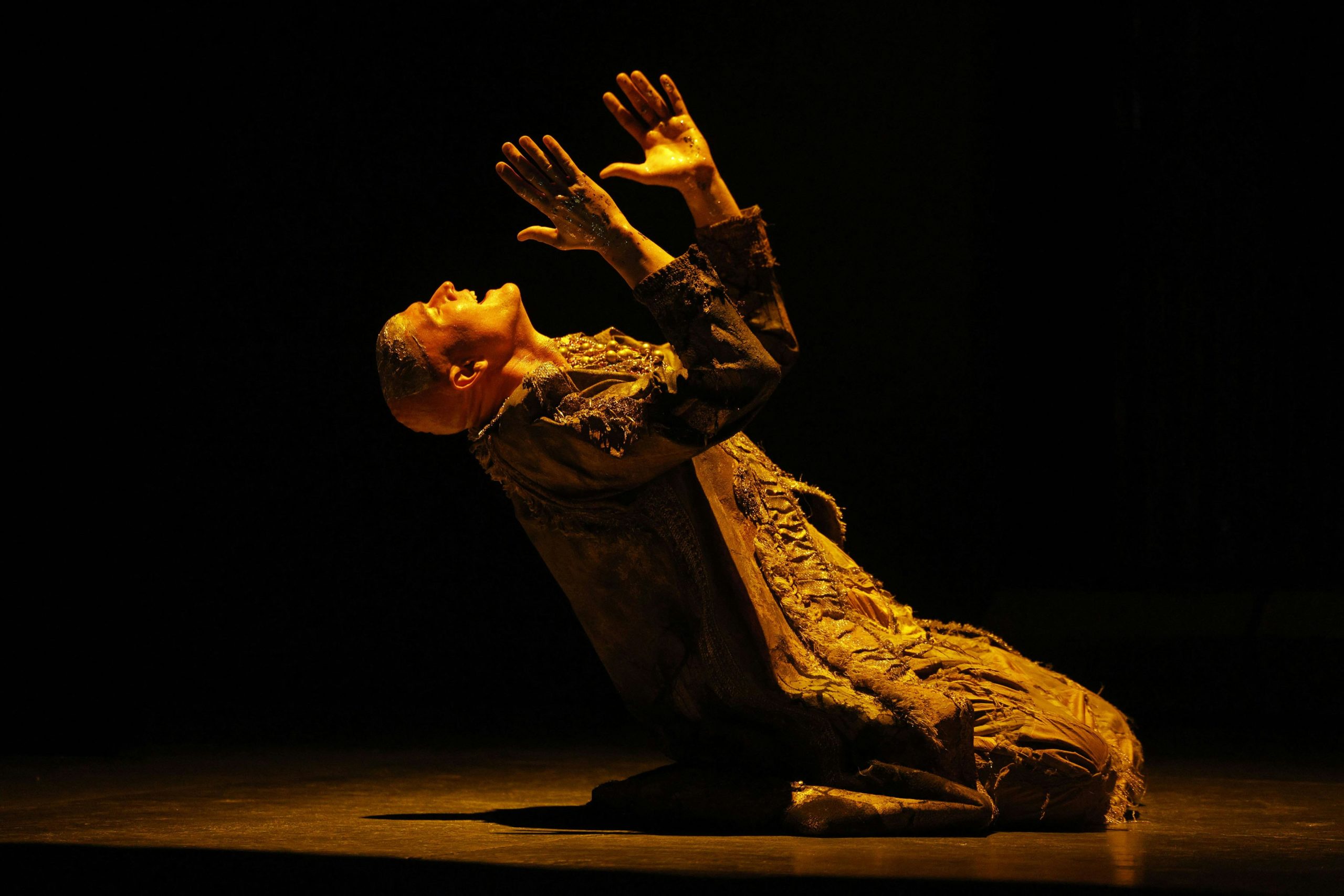
This creates a challenge for the audience—how to follow slow, ritualistic actions unfolding on stage, in a language we cannot understand. And yet, Glass’s hypnotic music soon takes hold, and you surrender as well to the overwhelming scenography: forty performers in ornate costumes moving, veiled or masked, through the doors and passages of the stunning set. You are also captivated by the extraordinary countertenor voice of Akhnaten (John Holiday)—high, fragile, androgynous. It feels as if it belongs to a third gender—neither fully male nor female but both at once, and thus divine.
One of the most audacious elements of the staging is the recurring use of juggling. Balls—small, medium, even monumental—appear throughout, handled with grace the by performers. Director Phelim McDermott explains: “We have developed a choreographic juggling language that uses the systemic patterns of juggling to create visual rhythms that complement the music. We were inspired by images from the period showing ancient juggling practices.”* Another interesting idea is the visual system built around the new solar religion. Yellow neon rays are carried behind the king. When aligned, they form a radiant halo, allowing him to embody fully his divine power and aura.
Conducted by Dalia Stasevska, the orchestra perfectly navigates Glass’s gradually intensifying music, building toward its full hypnotic and visceral force. As William Berger has noted, “Philip Glass’s musical figures repeat and develop very minutely—one note changes, then another—and suddenly you find yourself in an entirely different place, wondering how you got there.”** That is precisely the point: to transport us into an ancient, nearly forgotten civilization, where time, space, color, and form operate mysteriously and remain elusive. A world we can only imagine, and dream—exactly what art, at its best, allows us to do. Akhnaten ultimately becomes a meditation on the futility of all orders, from the passing of the old world through the establishment of the new, ending with the disappearance of both—leaving only a trace, and an inspiration.
*Phelim McDermott, LA Opera.
**William Berger, The Met: In Focus, The Metropolitan Opera, New York.
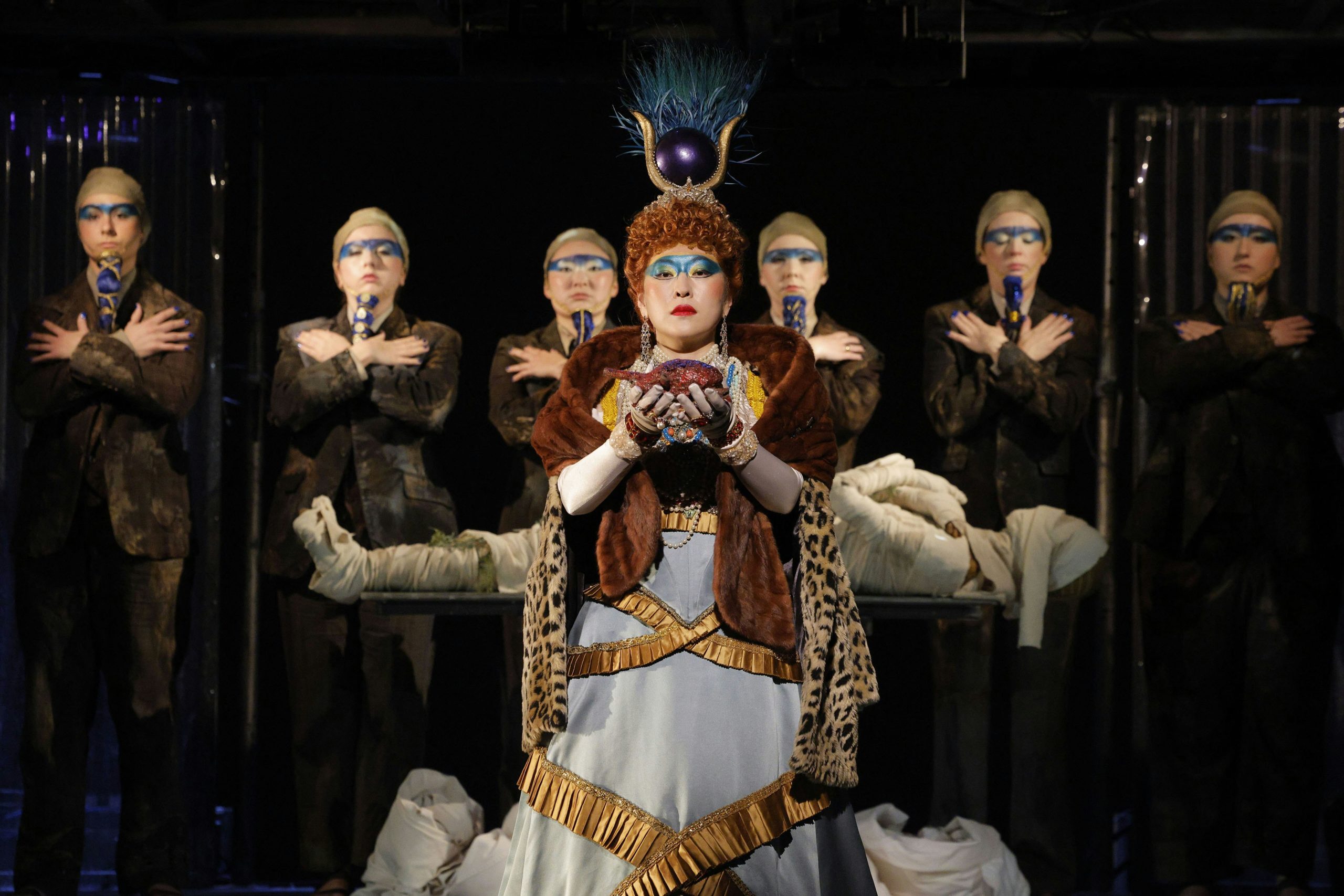
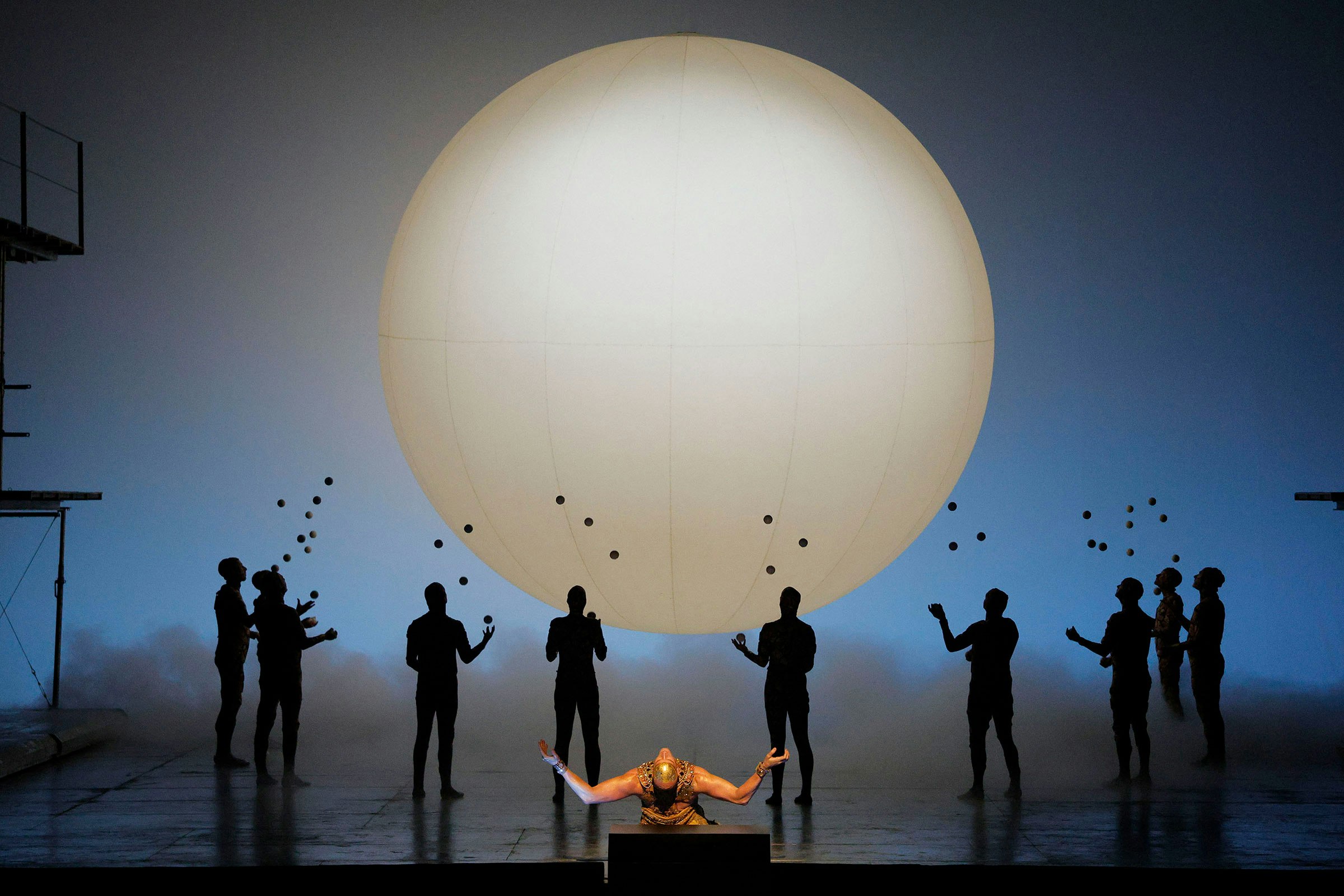
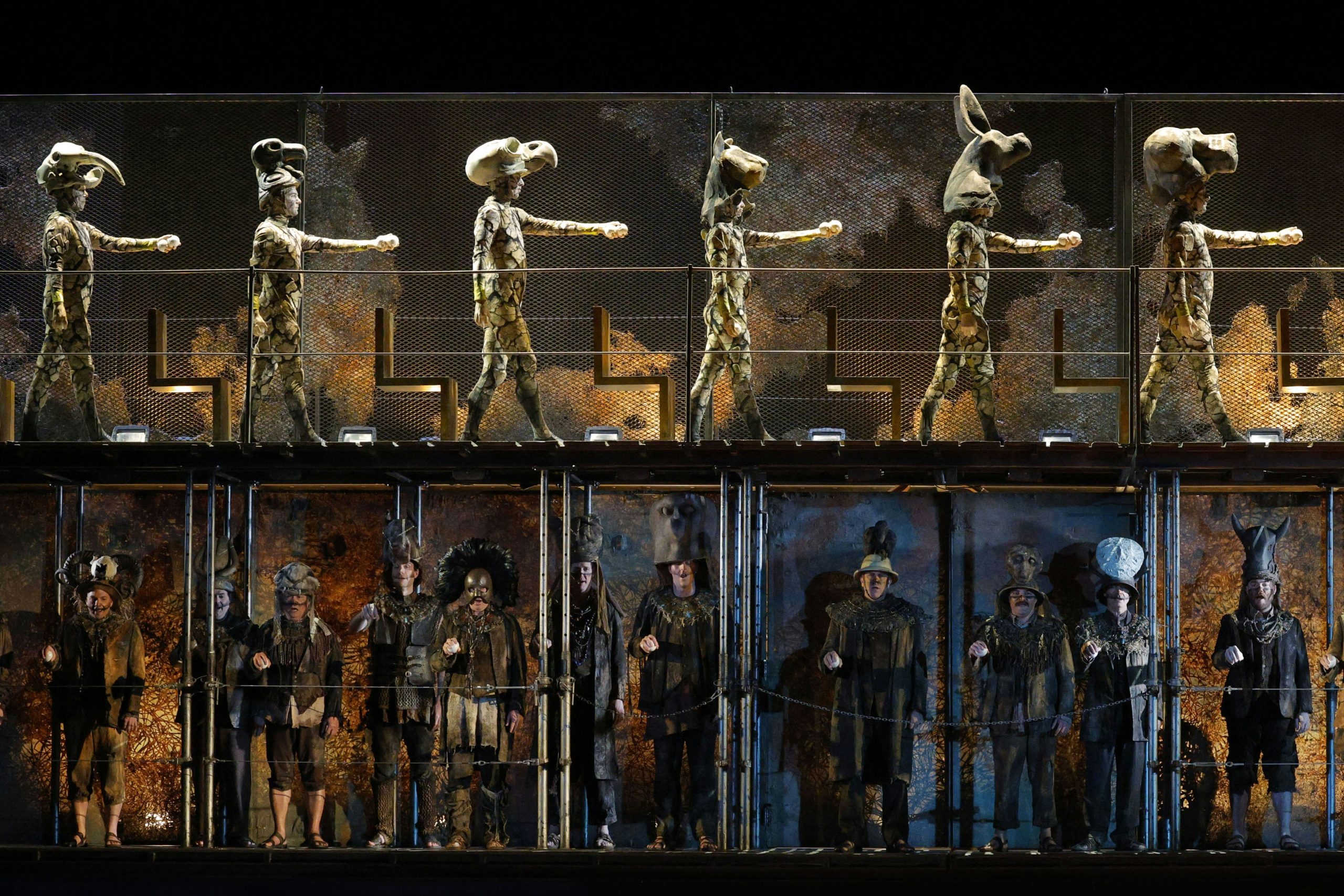

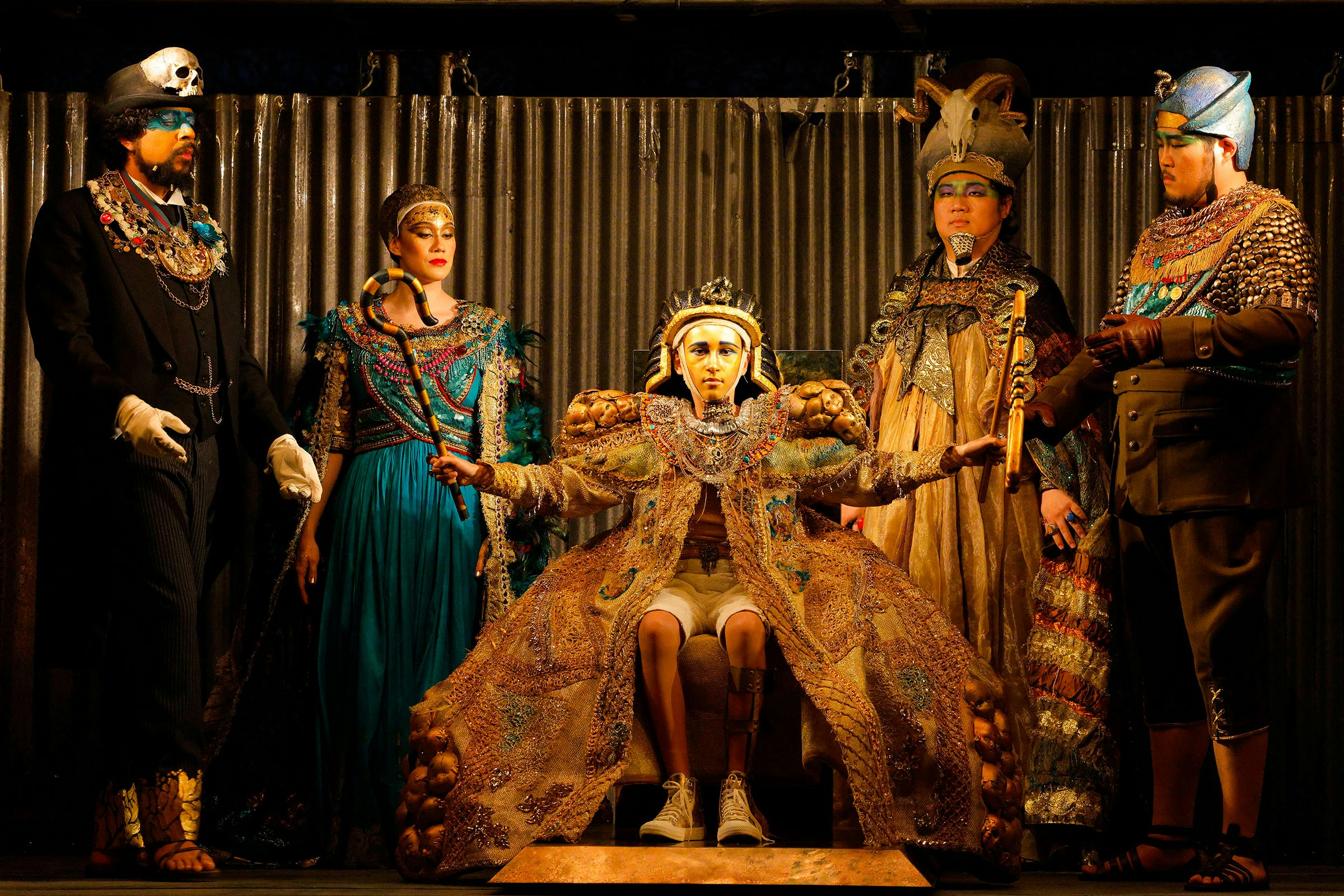
Philip Glass, Akhnaten (1984), LA Opera, February 28–March 22, 2026, from top: Sun-Ly Pierce as Nefertiti (left), John Holiday, and So Young Park as Queen Tye; scene from Akhnaten; Julia Maria Johnson as Meretaten (left), Emily Damasco as Bekhetaten, and Erin Alford as Neferneferuaten; Zachary James as Amenhotep III; Holiday; Park; James; scene from Akhnaten; Holiday; Schroeder Shelby-Szyszko as Young Tutankhamun, with (left) Vinicius Costa as Aye, Pierce, Yuntong Han as the High Priest of Amon, and Hyungjin Son as Horemhab.
Photos by Cory Weaver, courtesy and © LA Opera.