Carmen, or the Cruelty of Freedom
Yann Perreau
There are many ways to die for love, and perhaps even more ways to kill in its name. In the new LA Opera production of Carmen, love is not innocent—it never is—freedom comes at a terrible price, and desire is inseparable from death. Yet this superb production of Bizet’s masterpiece emerges as a heartbreaking hymn to love.
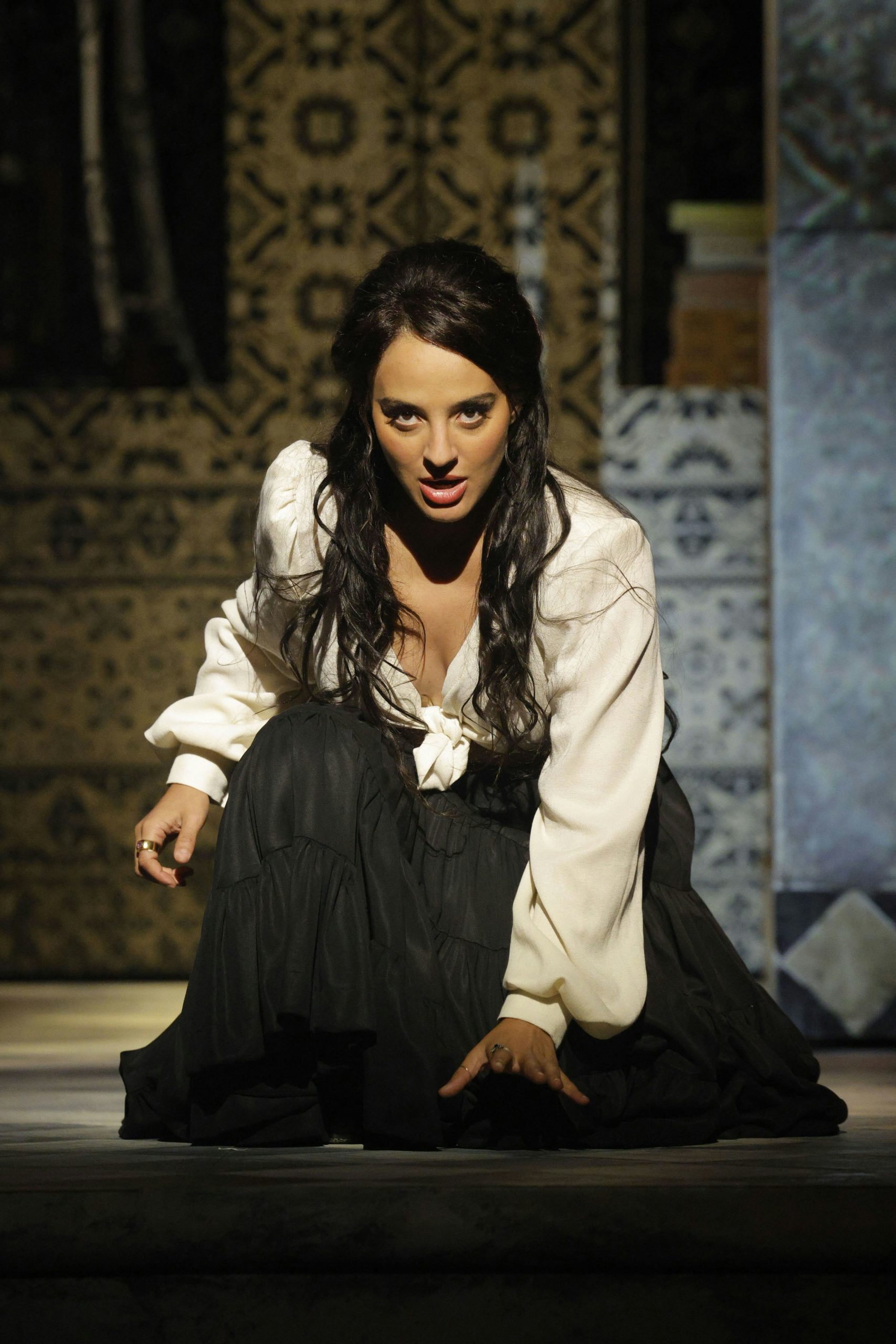
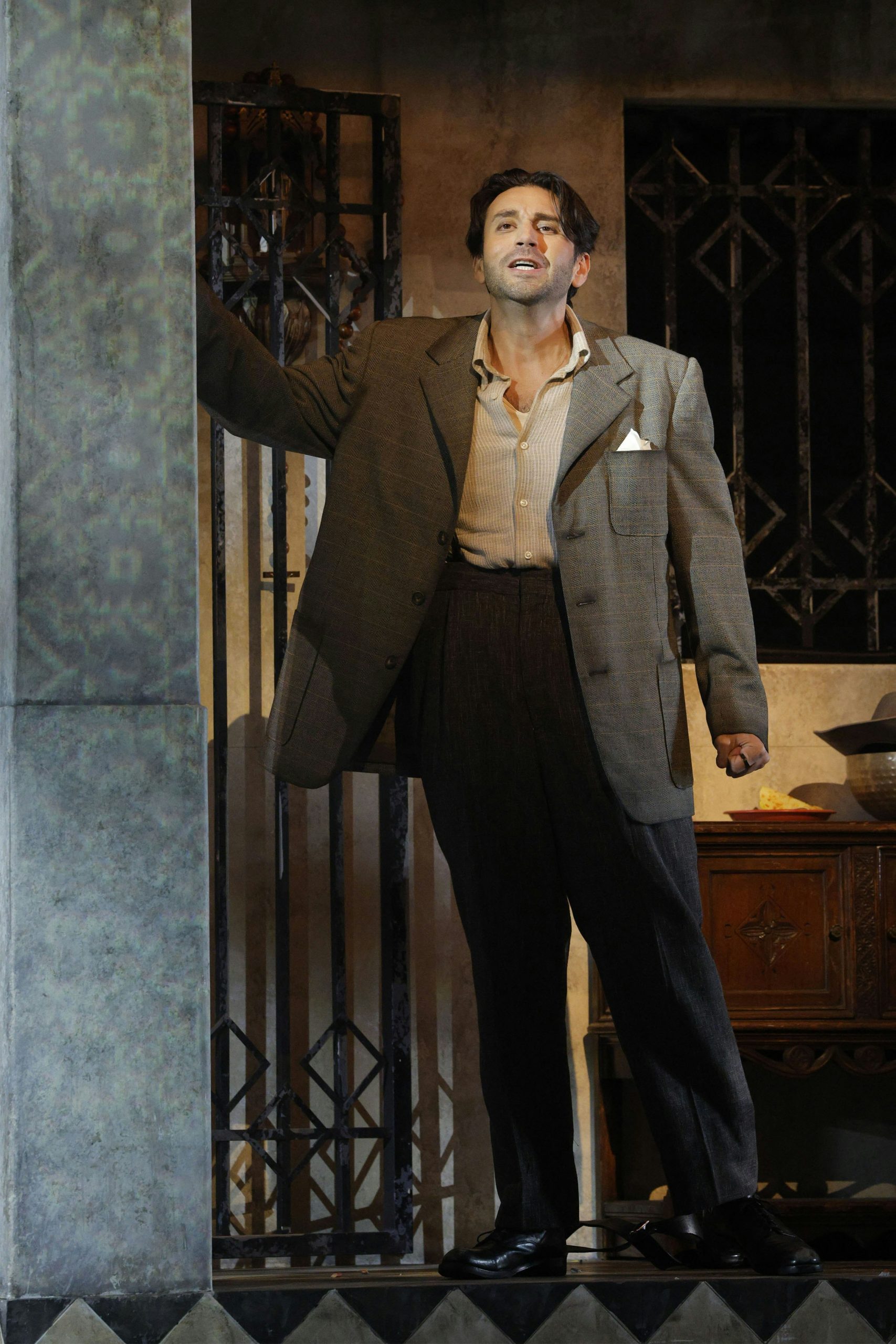
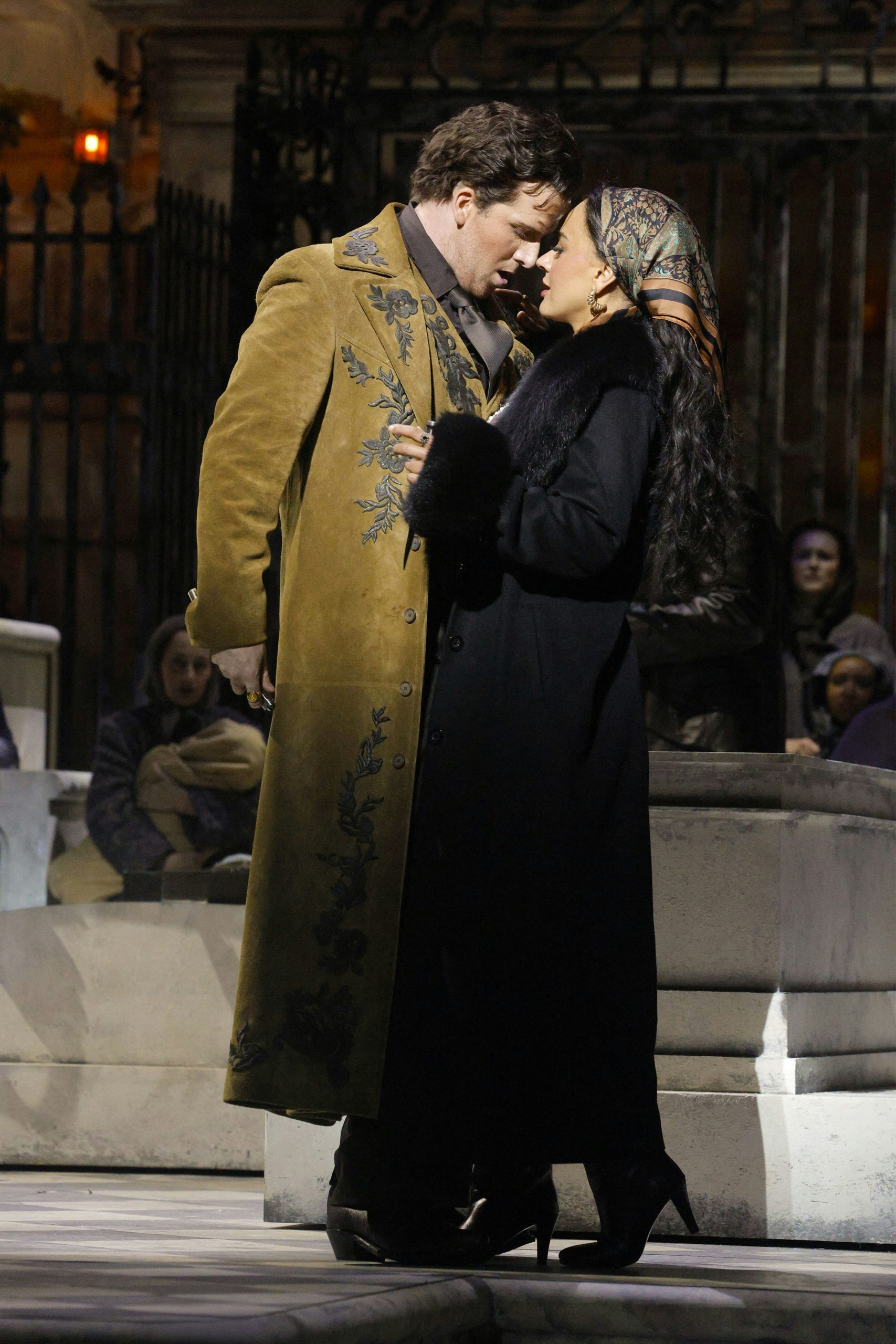
At the center of it all is the magnificent Rihab Chaieb, a mezzo-soprano whose splendid voice is warm, rich, and supple. Terribly sensual, irresistibly charming, mischievous, and funny, she commands the stage with such ease that one almost forgets how cruel she can be to Don José, the man who loves her. A femme fatale, certainly, but one who seems to take as much pleasure in making us laugh as in seducing us. During the famous “Habanera,” she sings, dances, and plays castanets simultaneously, a true tour de force. As Chaieb herself describes her character, she is “flirty, powerful and sweet, indifferent to what others might think.” Opposite her, Joshua Guerrero gives us a Don José who is at once sympathetic and pathetic. His love is sincere, painfully so. But gradually his devotion becomes oppressive, his jealousy suffocating, his insistence on being loved in return unbearable. He becomes the man who cannot accept that love does not confer ownership.
This Carmen is audaciously feminist. Her freedom is merciless, but it is hers. L’amour est un enfant de Bohême, she sings, and later, libre elle est née et libre elle mourra. She was born free, and free she will die. Beyond the caricatural, even sexist interpretations of the past, in which Carmen was reduced to a dangerous seductress, a woman of dubious morals whose punishment seemed inevitable, she emerges here as neither saint nor sinner, but rather a woman who refuses to surrender her freedom, even for the sake of her life. Chaieb herself, funnily, offers Don José a good advice: “Run away—for everyone’s sake!”
Bizet’s opera is also about Eros and Thanatos, desire and death, and how inextricably intertwined they are, nowhere more deeply than in the world of bullfighting. Goya understood it, Picasso returned to it obsessively, and Michel Leiris explored it in L’Âge d’homme and his writings on the bullring. The corrida is a theater of seduction, where grace, eroticism, and the possibility of death become inseparable.
This dimension finds an ideal incarnation in Liam James Karai’s Escamillo. With his commanding presence and charisma, he is much more than the conventional toreador. He, too, is sincere in his desire, his pleasure in being admired. Like Carmen, he lives through risk and seduction. The opera thus escapes conventional morality. Don José loves sincerely, but his love becomes murderous; Carmen can be cruel, yet her refusal to betray herself is admirable. Beyond good and evil, what remains is the intensity of existence, its beauty and terror. Very Nietzschean.
Making his LA Opera debut as conductor, the company’s new Music Director Domingo Hindoyan brings energy and dramatic sensitivity to Bizet’s score, balancing its irresistible rhythmic vitality with the darker sense of destiny running beneath its melodies. Antonio Najarro’s choreography draws on the richness of Spanish dance, from the percussive rhythms of zapateado to the elegant, almost Baroque vocabulary of the escuela bolera, and he creates a subtle combination of popular exuberance, elegance, and sensuality. The dancers are exceptional, their virtuosity enhanced by Mattie Ullrich’s sumptuous costumes. Equally impressive is the physical commitment of the principal singers, accomplished dancers as well as remarkable vocalists.
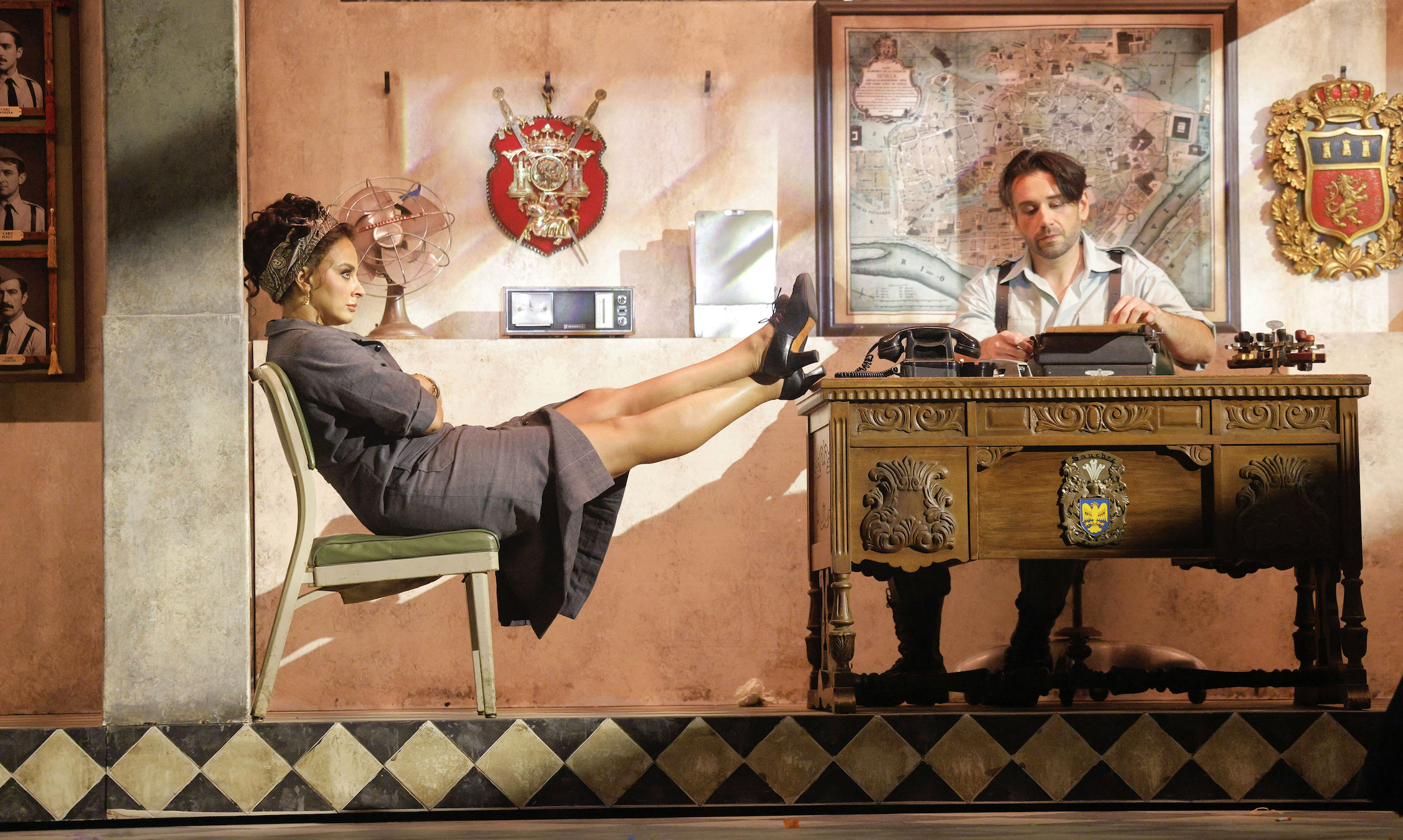
The production’s success owes much as well to Thaddeus Strassberger, who was responsible for both direction and scenic design. Almost every scene resembles an extraordinarily complex tableau vivant—sumptuous, precise and bursting with life. The stage is rarely empty. From the opening, the streets of Seville teem with prostitutes, soldiers, policemen, smugglers, children, passersby. Several narratives unfold simultaneously, and even when the principal singers occupy the foreground, an entire society continues living around them. The effect recalls those great crowded paintings of the European Renaissance, baroque, and later periods—works by Bruegel, Bosch, Goya, Ensor—in which every figure participates in the life of the whole, with all of its masquerades, vanities and illusions. But not everything is convincing. The enormous piñata broken open to release candy is an amusing nod to Mexican traditions. But other anachronisms—such as Don José’s mother suddenly watching television or the appearance of a helicopter—are distracting and confusing. They add little and momentarily disrupt the experience.
This Carmen is modern and meaningful because it moves beyond moral judgment to embrace the beauty and contradictions of existence itself. In the end, she dies, but she is not defeated. Her refusal to renounce herself remains the opera’s most beautiful and terrible gesture. Love is meaningful when it is free. And freedom, like beauty, can be merciless.
Rihab Chaieb quotations are from the LA Opera production’s program.
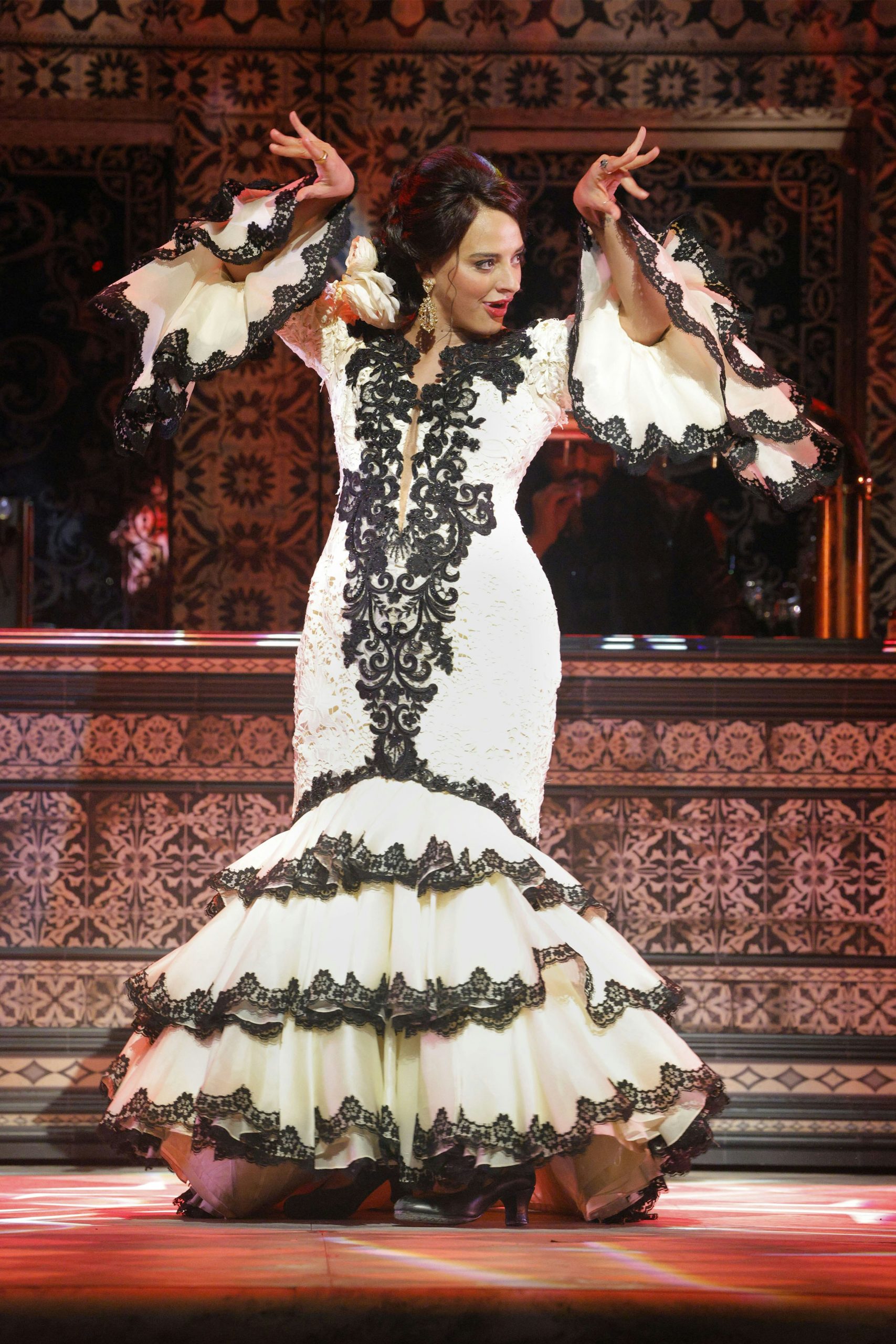
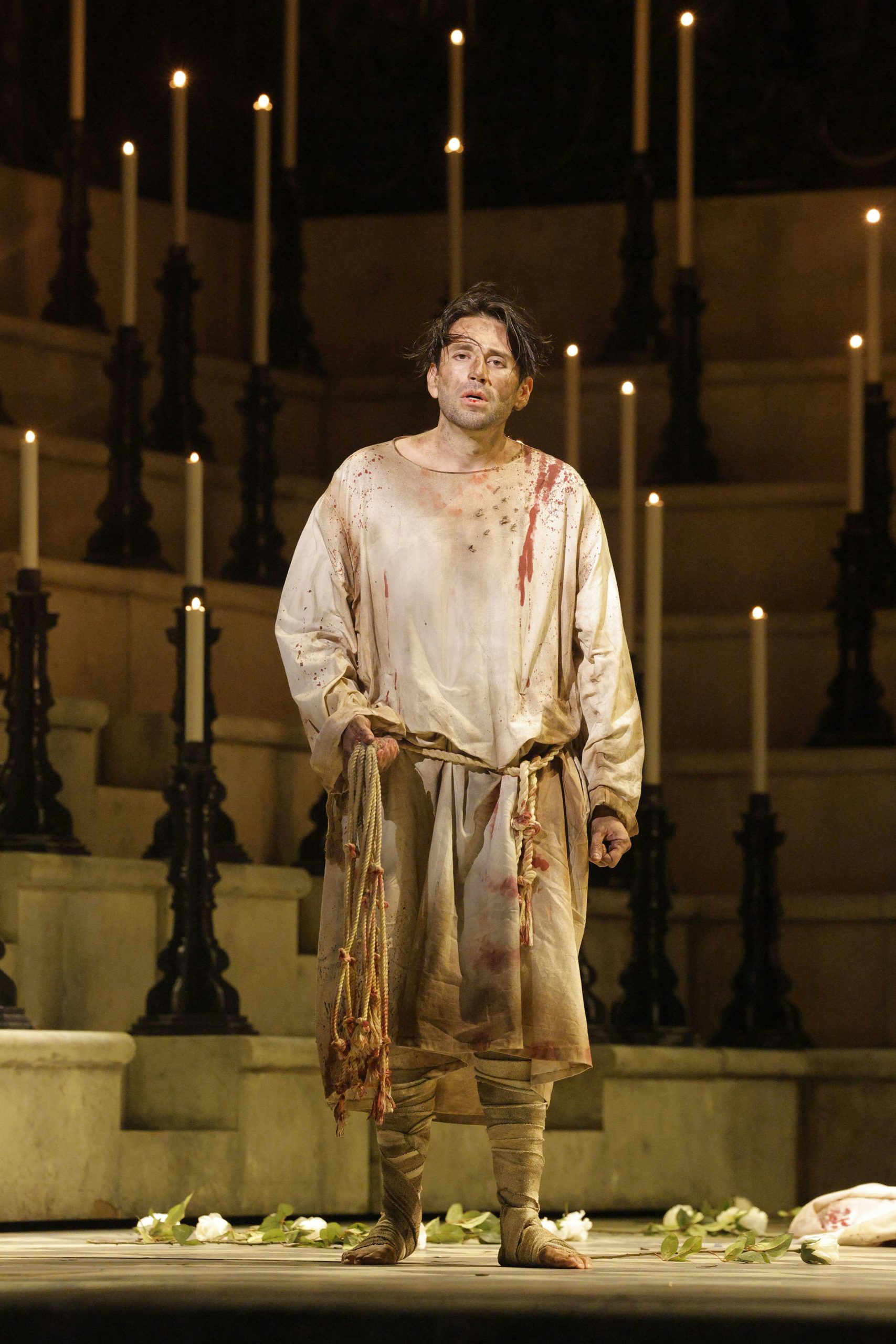
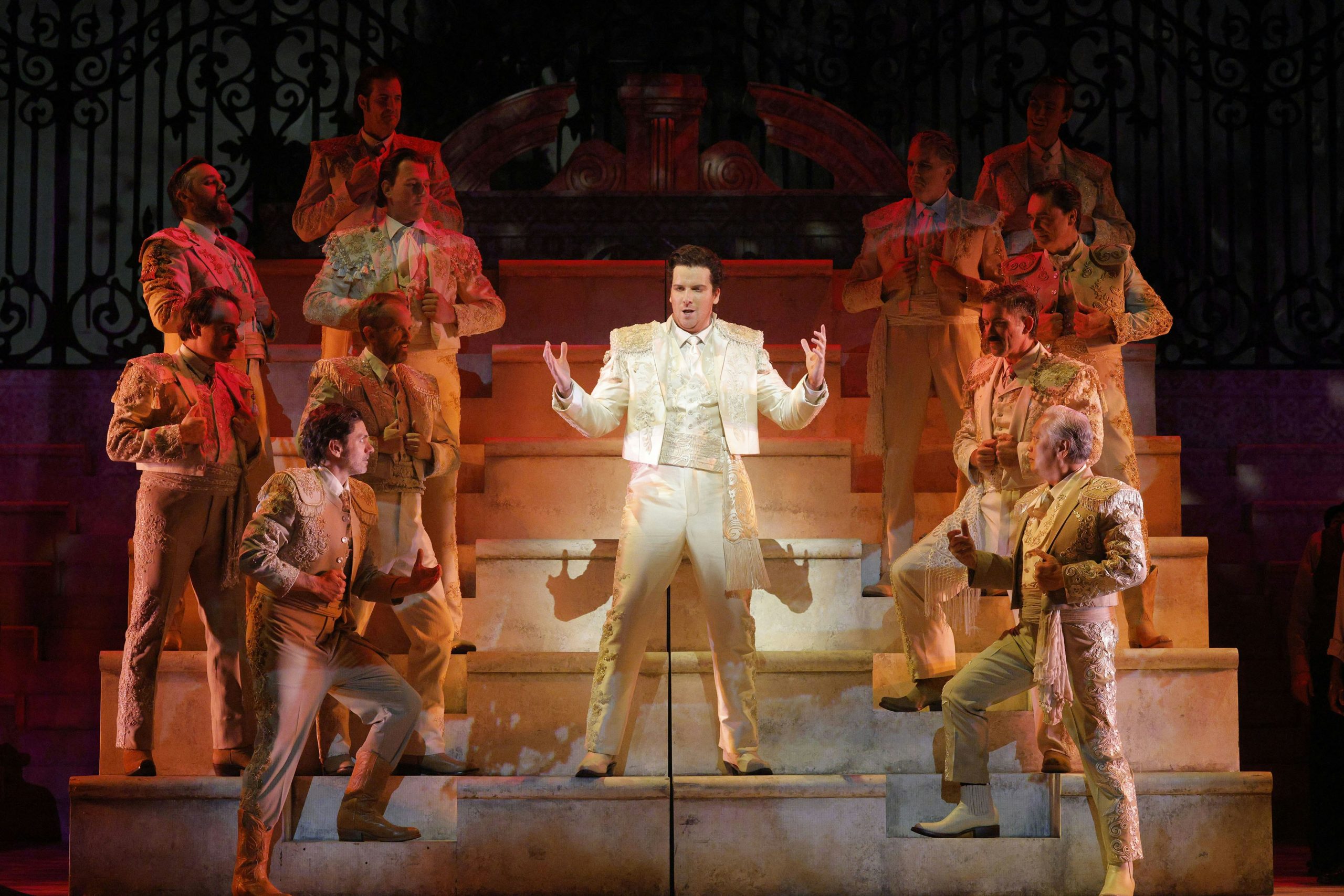
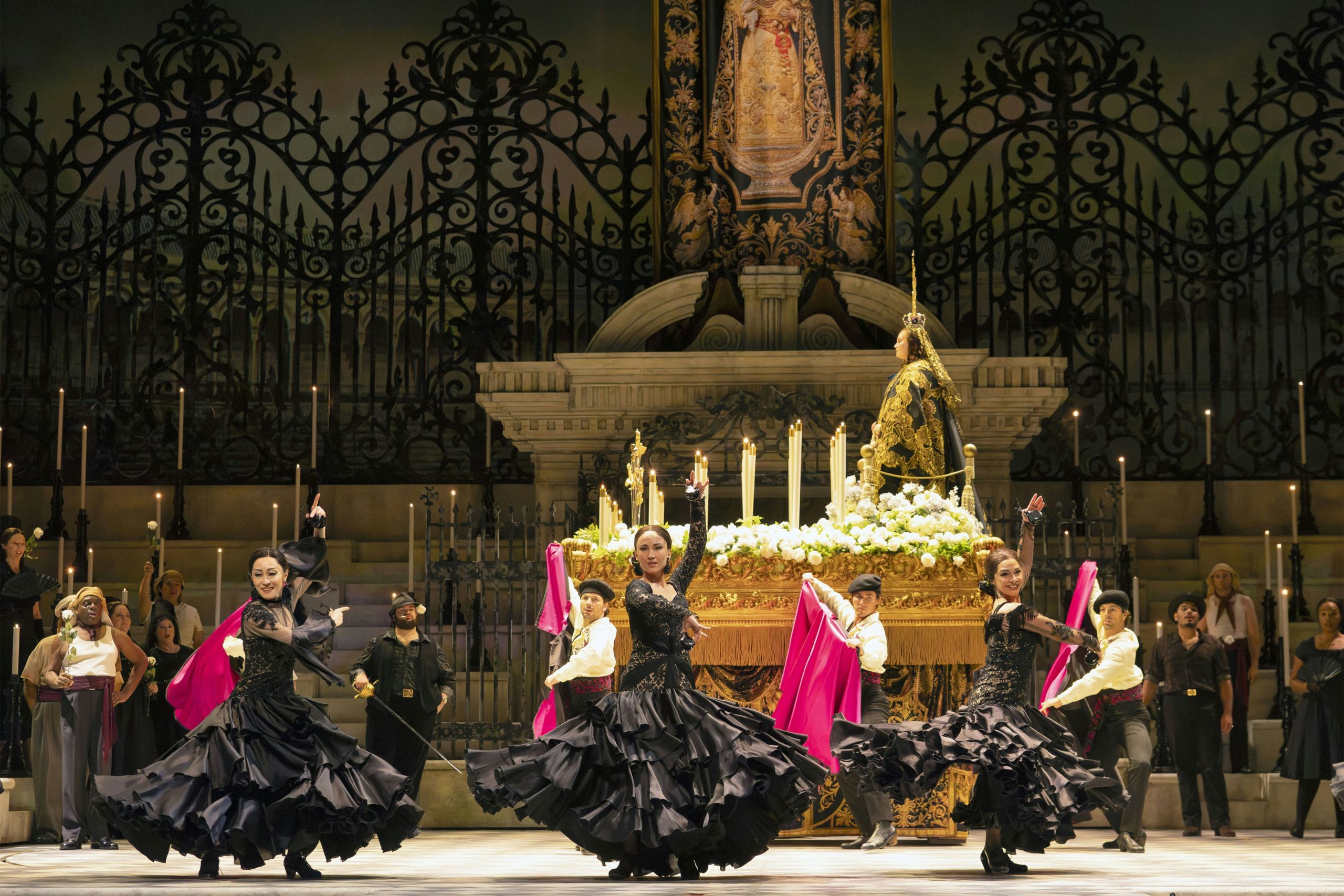
Georges Bizet, Carmen, LA Opera, October 17–November 7, 2026, Dorothy Chandler Pavilion, conducted by Domingo Hindoyan, from top: Rihab Chaieb and Joshua Guerrero; Chaieb; Guerrero; Liam James Karai and Chaieb; Chaieb; Guerrero; Karai; scene from Carmen.
Photos by Cory Weaver, courtesy and © LA Opera.