
THE MAGIC FLUTE — Wolfgang Amadeus Mozart
LA Opera, May 30–June 21, 2026
By Yann Perreau
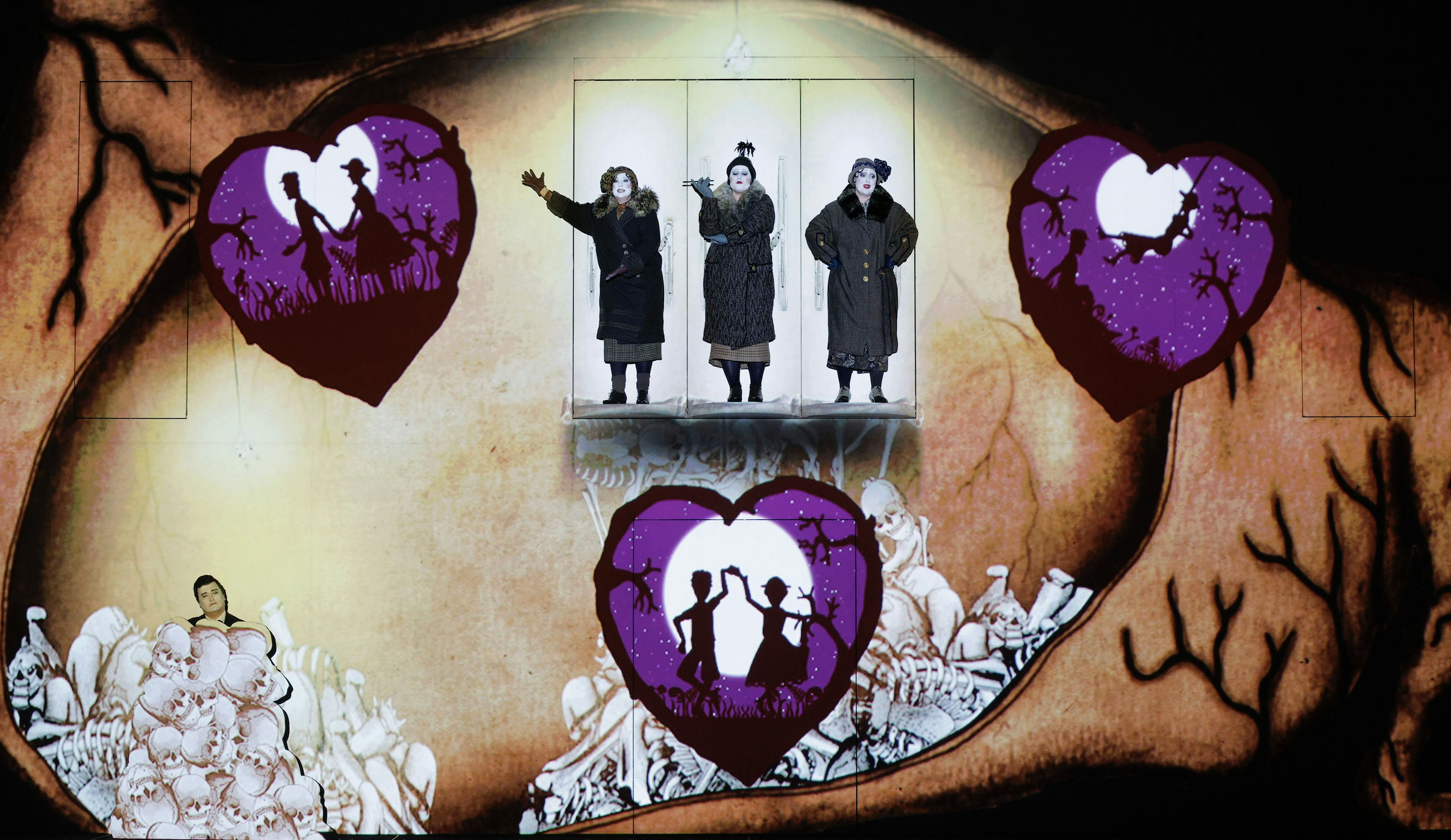
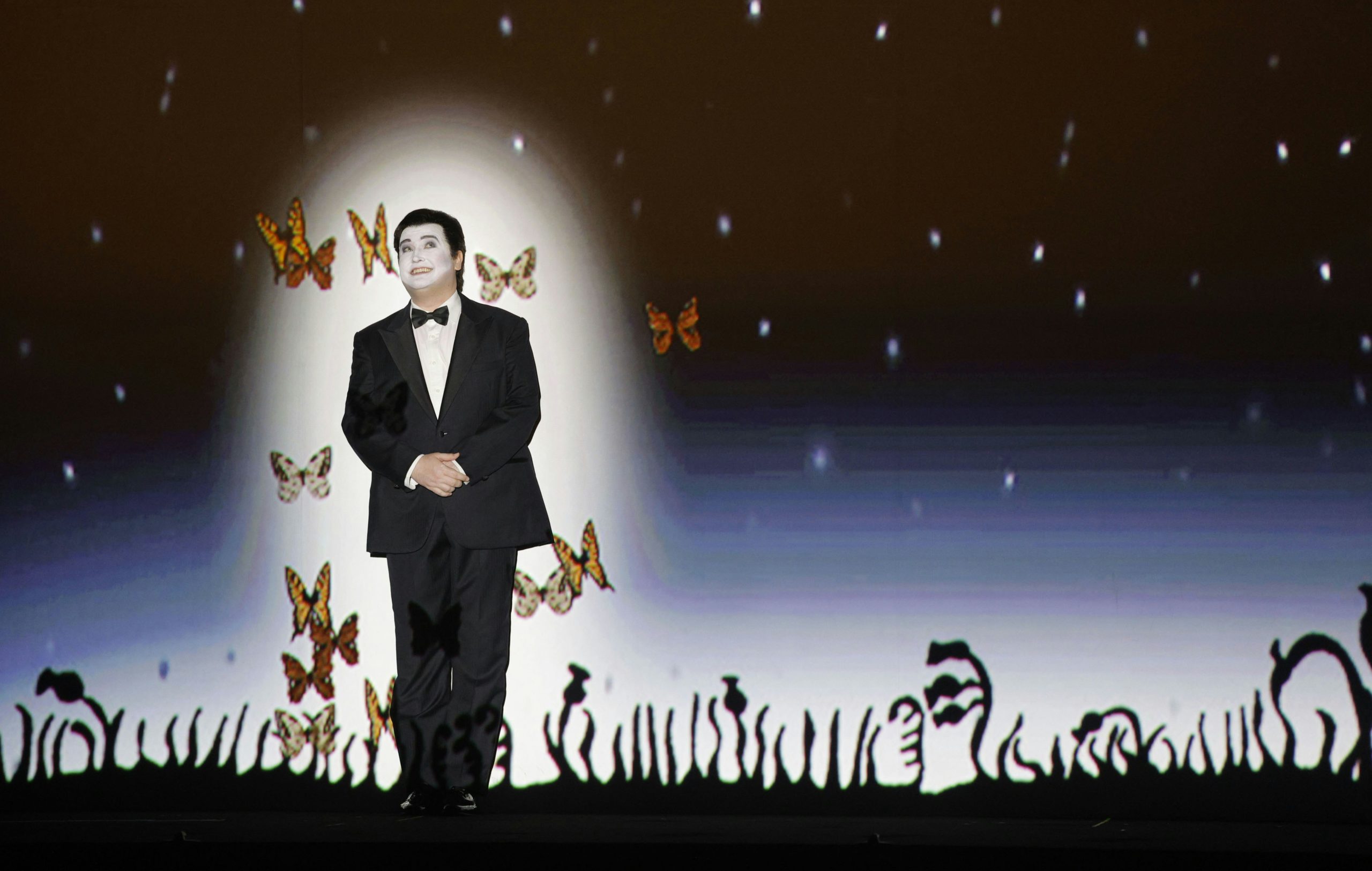
A strange scene opened the recent LA Opera production of The Magic Flute—conductor James Conlon’s final engagement as the company’s Music Director. The curtain rises on a projected animated film that completely envelops Prince Tamino (Miles Mykkanen). He wanders through a dark, surreal forest before being chased by a gigantic serpent slithering through the animated landscape. Tamino’s legs are themselves animated, so although the real performer barely moves, we see him running frantically. Looking like a character who has escaped from a silent animated film, he finally collapses. Then come the mysterious Three Ladies (Diana Newman, Katie Trigg, and Meridian Prall) sent by the Queen of the Night (Aigul Khismatullina). Here they resemble glamorous Weimar cabaret performers—towering heels, cigarettes dangling from their lips, exaggerated make-up and flirtatious attitudes—rather than celestial spirits. Their immediate infatuation with the handsome prince quickly turns into a delightfully unruly quarrel, producing the first great comic moment of the evening. Laughter spreads across the audience and will continue to do so throughout the performance.
Welcome to the fantastic world of 1927, the British theatre company founded in 2005 by director and writer Suzanne Andrade and animator Paul Barritt, renowned for its unique fusion of live performance and hand-drawn animation. Pairing one of the most beloved operas ever written with avant-garde visual theatre was the inspired idea of Barrie Kosky, artistic director of the Komische Oper Berlin from 2012 to 2022.
Kosky first imagined the collaboration after seeing Between the Devil and the Deep Blue Sea, 1927’s first production, quickly discovering that he shared Andrade and Barritt’s fascination for revue, vaudeville, cabaret and early music hall. “From the moment the show started,” he recalls, “there was this fascinating mix of live performance with animation, creating its own aesthetic world. Within minutes, this strange mixture of silent film and music hall had convinced me that these people had to do The Magic Flute with me in Berlin!”
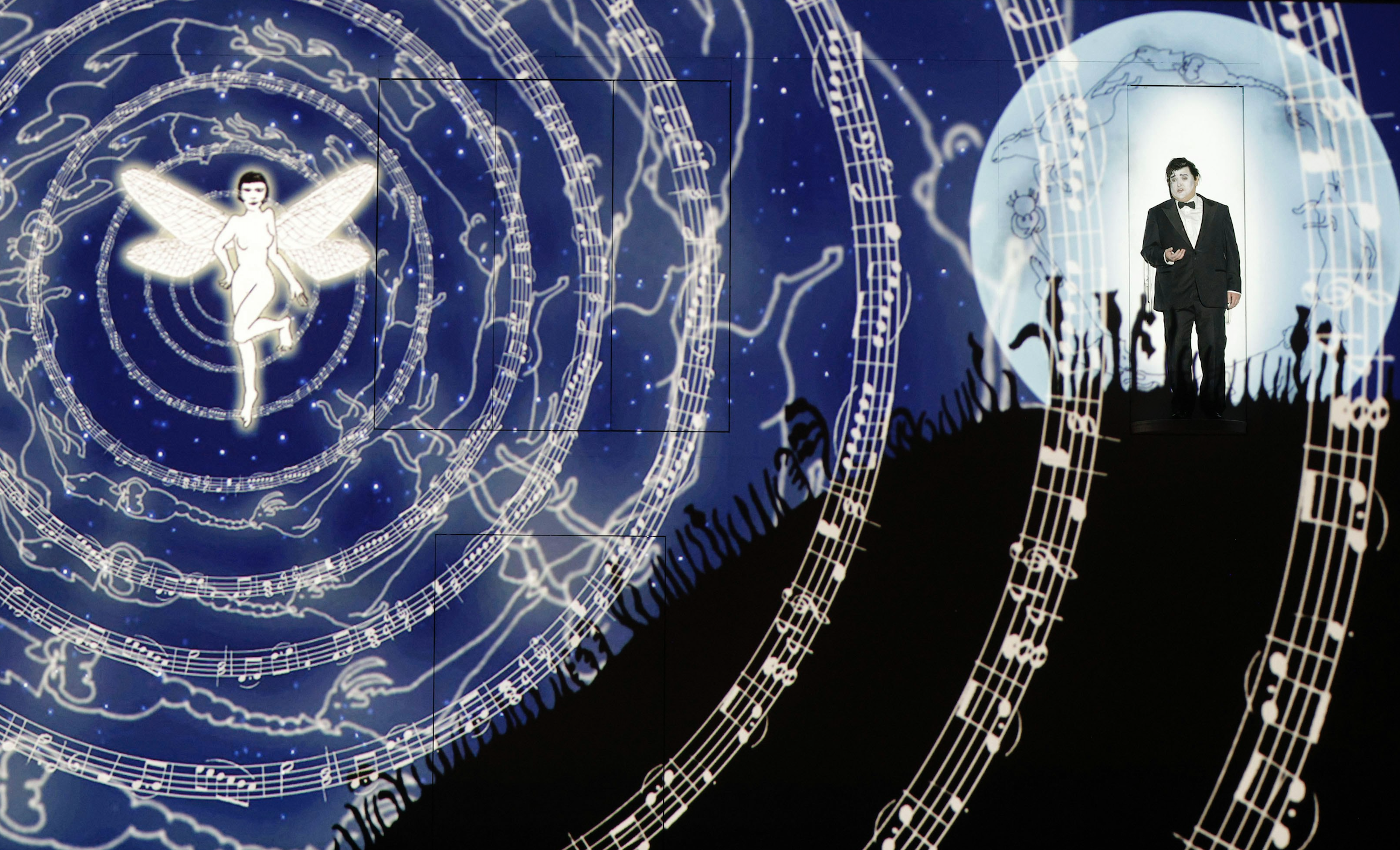
Nosferatu, Buster Keaton, Louise Brooks, and other figures of silent cinema haunt almost every scene. The magic flute itself is embodied by a tiny fairy who looks like she has escaped from a vintage pin-up illustration. Yet silent cinema is only one layer of this rich visual collage. Working in Berlin, Andrade and Barritt immersed themselves in the city’s artistic imagination, drawing from the expressionist art and entertainments of the Weimar period—in particular the extraordinary flowering of animation—that made Berlin one of Europe’s great creative laboratories during the 1920s.
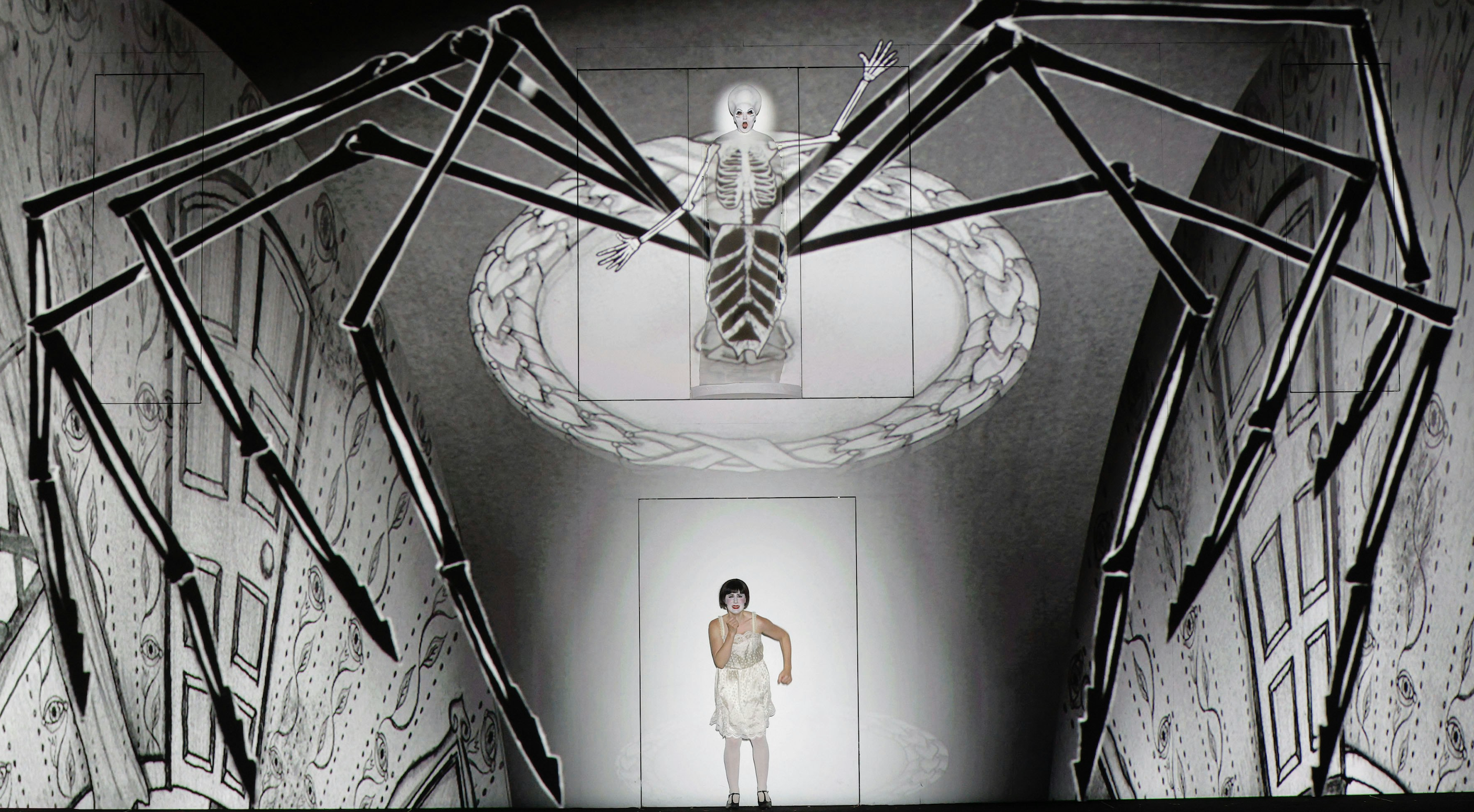
The references do not stop there. One could easily see an echo of Louise Bourgeois in the Queen of the Night, who appears as a gigantic spider balancing on impossibly long legs. Later, when Papageno (Kyle Miller) is offered a glass of wine, it magically becomes a bright pink cocktail, sending him into a delirious hallucination populated by flying elephants that could have wandered straight out of Disney’s Dumbo.
The adaptation sometimes borders on the grotesque. The succession of visual gags, optical illusions, and theatrical tricks were an occasional distraction, and I found myself wishing, for a brief moment, that I could simply close my eyes and surrender to Mozart’s music. Yet this irreverence is profoundly Mozartian. The composer adored comic theatre and popular entertainment. He constantly blurred the boundaries between high and low culture, between sublime music and earthy humor. One suspects he would have delighted in such joyful theatrical anarchy.
There is also a subtle irony running through the creators’ reinterpretation of Mozart. When Papageno is finally reunited with Papagena (Emily Damasco) and dreams of starting a family, children suddenly begin appearing by the dozen. His ecstatic smile slowly turns into panic, as though wondering whether he has just made the biggest mistake of his life. Likewise, the brotherhood of Sarastro (Kwangchul Youn) appears not simply as guardians of wisdom, but also as a gathering of pompous bureaucrats: vehicles of intimidation and rigidity in the guise of defenders of virtue. Rather than embalming Mozart as a cultural monument, the production revives the mischievous, irreverent spirit that made him so modern in the first place.
Fresh. Spontaneous. Immediate. At one point, Papageno merely pulls a frightened face and the audience bursts into laughter. No dialogue is needed. The supertitles projected above the stage almost become secondary. Like the silent films that inspired it, the production tells its story primarily through images. As Andrade has remarked: “I think that almost every story can be told without words… You can convey so much of a story through purely visual means.” And that is perhaps the greatest achievement of this remarkable production. It reminds us that The Magic Flute is not only an opera to be heard, but a dream to be seen.
Suzanne Andrade and Barrie Kosky quotations from Ulrich Lenz, “A Magical Storybook,” a conversation with Andrade, Kosky, and Paul Barritt published in the 2026 program for The Magic Flute, courtesy and © LA Opera.


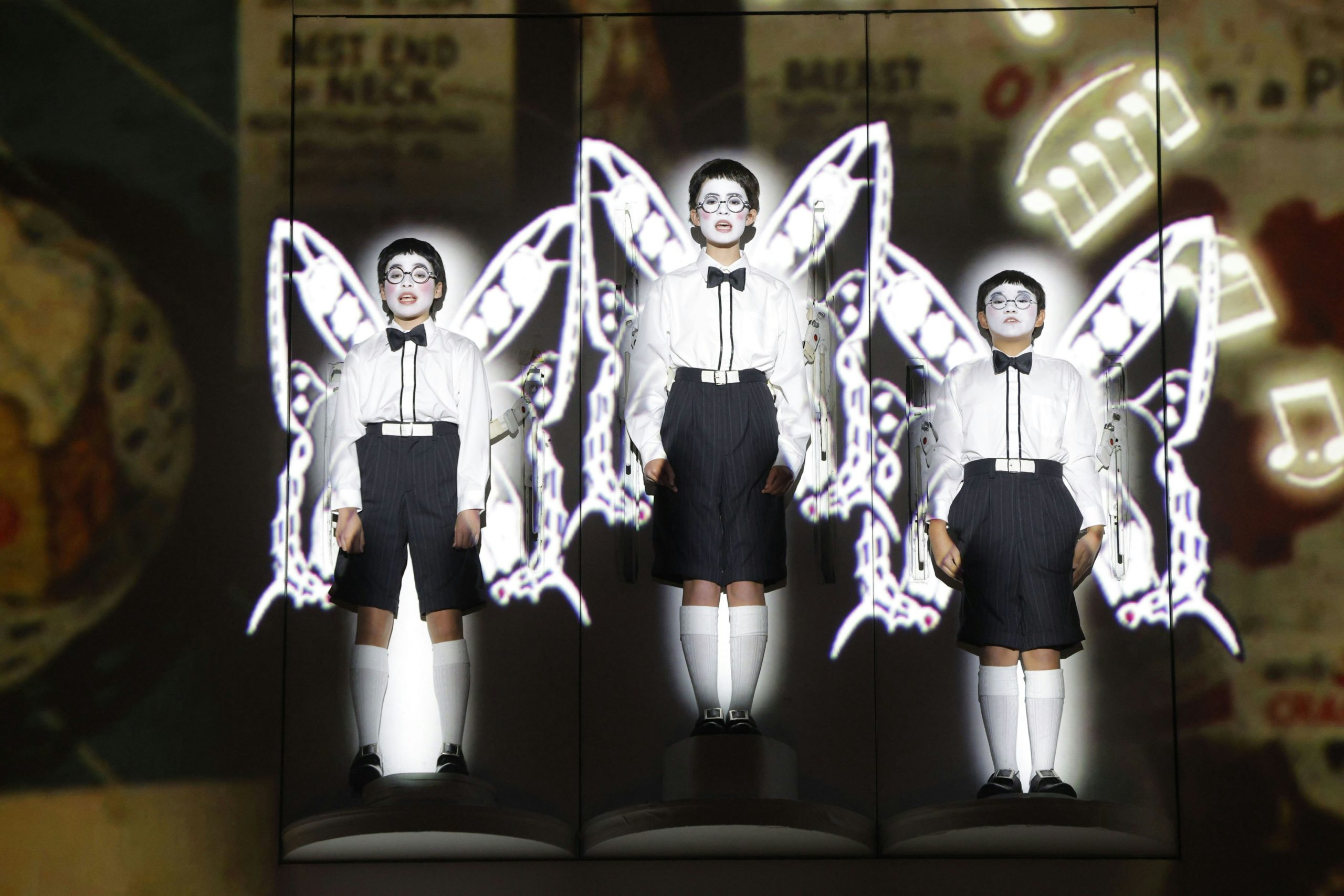

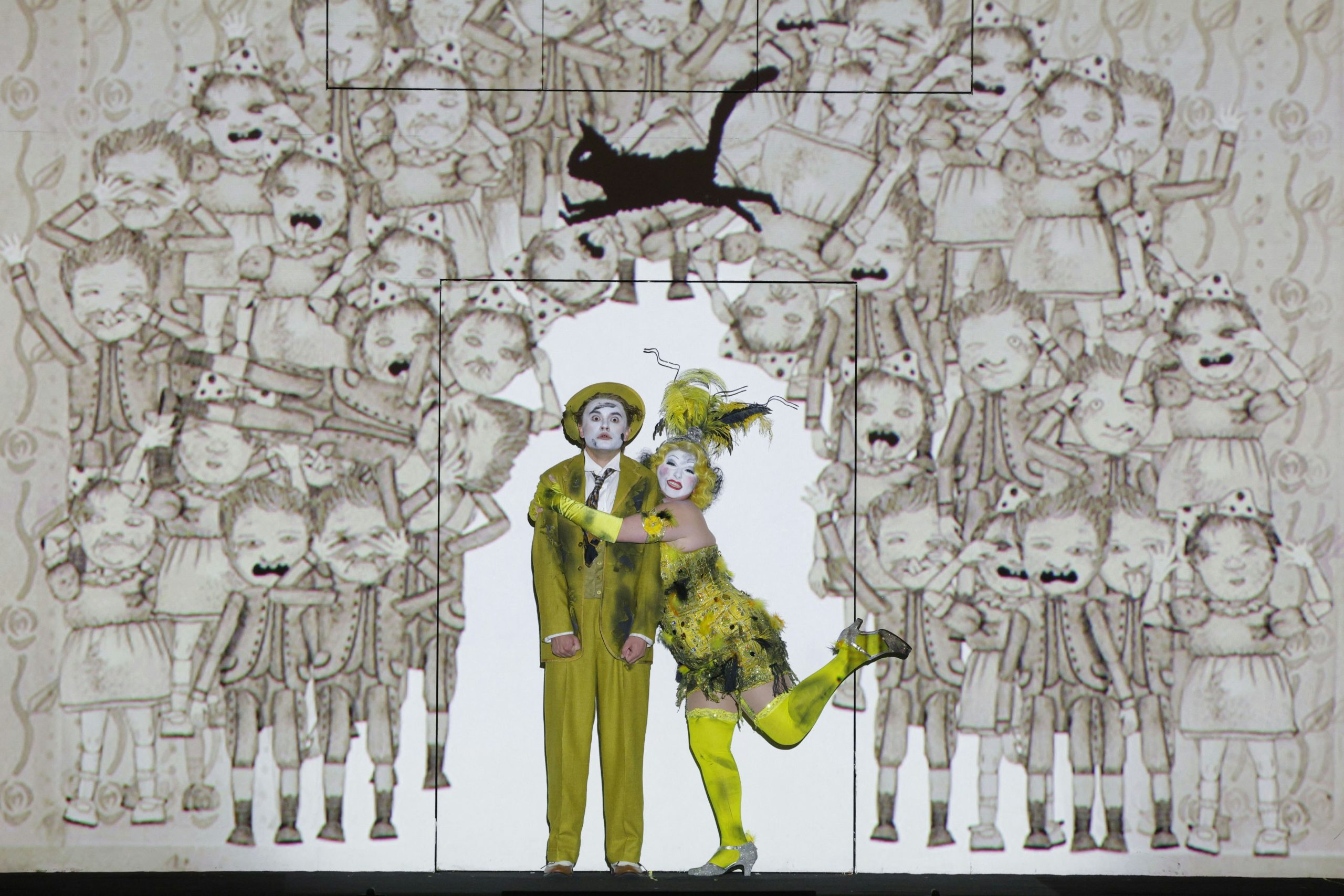
Wolfgang Amadeus Mozart, The Magic Flute, LA Opera, May 30–June 21, 2026, conducted by James Conlon, from top: Miles Mykkanen (far right); Diana Newman (left), Katie Trigg, and Meridian Prall, with Mykkanen (bottom left); Mykkanen; Kyle Miller; Aigul Khismatullina (above) and Sydney Mancasola; Hyungjin Son (left) and Nathan Bowles with Mykkanen (center); Miller; Alexa Ho, Elle Thorman, and Clark Chua; Kwangchul Youn (center) and Zhengyi Bao (right); Miller and Emily Damasco.
Production by Suzanne Andrade and Barrie Kosky; animation design by Paul Barritt. Photos by Corey Weaver, courtesy and © LA Opera.