
SARA SACHS — LYING
Written by Sara Sachs and Nanna Friis
New Theater Hollywood, June 3–6, 2026
Sara Sachs’s peculiar way of working with garments reveals an inverted gaze. Her costumes and props are not made for representation but rather for the exteriorization of internal landscapes. Crafted and impregnated by inner drives, they fold out the body rather than cover it. Still, to make inner worlds manifest themselves is not a solo endeavor; any ritual—from the cinematic experience to the religious one—requires the group’s suspension of disbelief and collective abandonment of the narrative and its set-up. The effort to allow these bizarre, hand-crafted universes to manifest is here performed as a labor of love between Sachs and the muses populating her extended family.
To renew life. One cannot do it alone! — Francesca Astesani
An unusual visitation occurred this past week in Hollywood’s nether reaches when Sara Sachs presented a rare public engagement of a performance work titled Lying, a “choreographed, singing sculpture” that found, for four nights, a suitable home at Calla Henkel and Max Pitegoff’s New Theater Hollywood. Sachs is a fantasist who operates “in the sculptural outskirts of fashion, the unhinged intersections of art and theater,” visually schooled in the goth/baroque worlds of Feuillade, Dalí, and Cocteau—where “actors haunt the corridors of some dreamlike subway, an abandoned coal mine, and ruined cellars oozing with water… Clad in animal skins like motorists at the turn of the century, horns and cardboard crowns on their heads.”
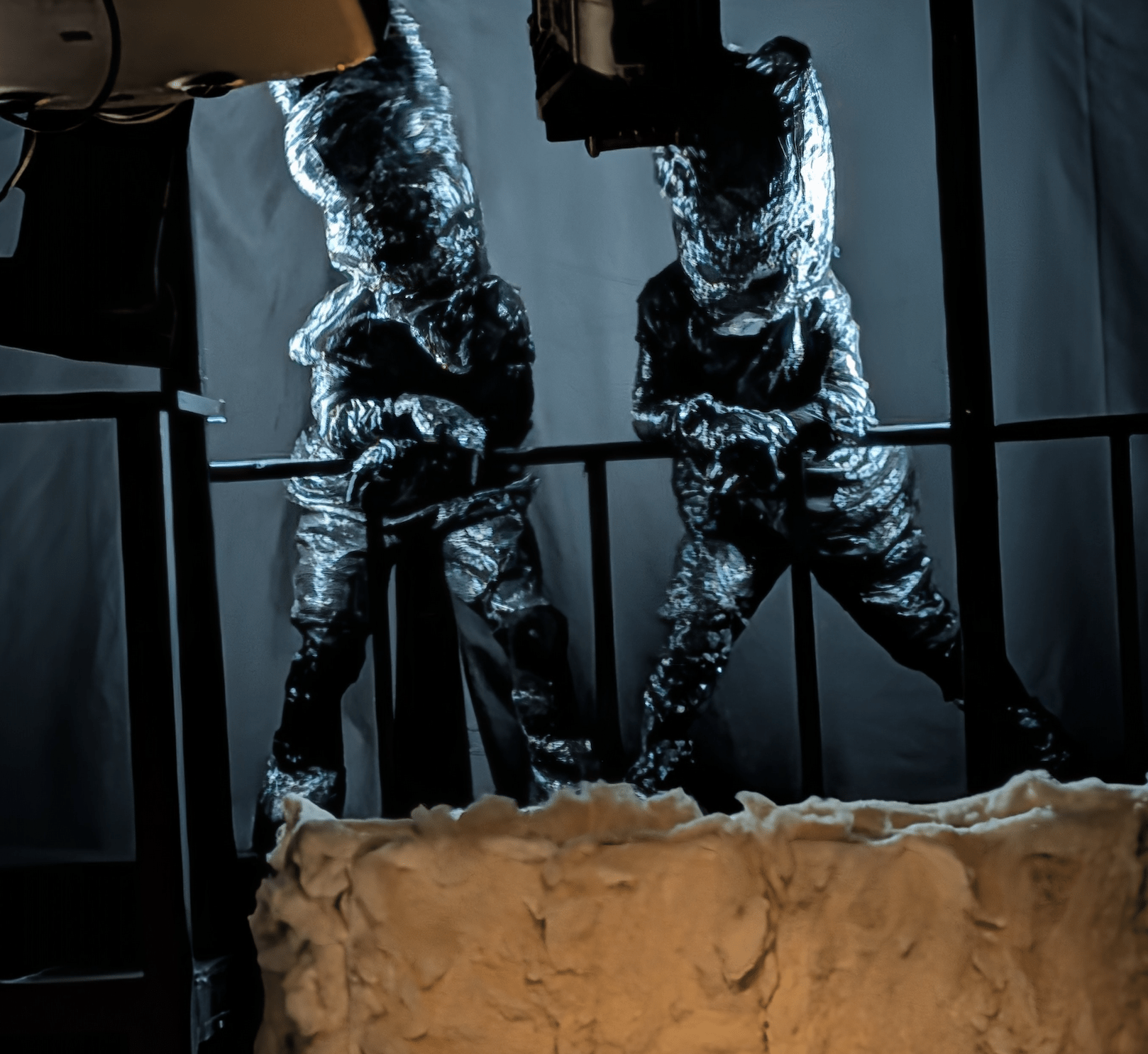
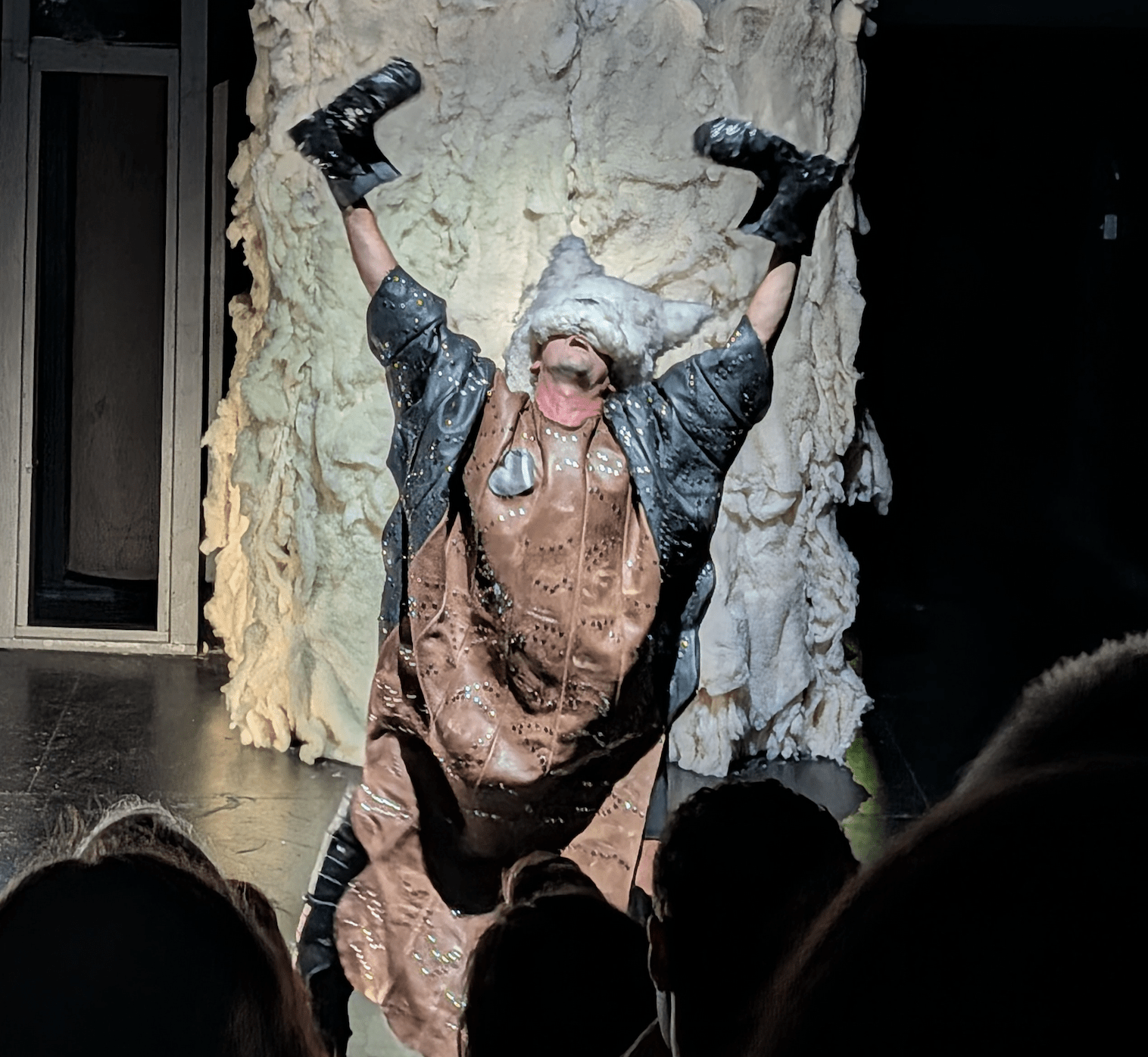
Instead of cardboard crowns, two of Sachs’s performers sport cat heads wrapped in black plastic. Jasmine Albuquerque and Ryan Spencer play sarcastic feline aunts to Climax, an immoveable white-furred sphinx voiced by the work’s composer Angel Deradoorian. The aunts’ dialogue is entirely made up of banal platitudes—“turn the other cheek, the other cheek, the other cheek”—while Isidore and Secret, played by Arne Gjelten and Ryan Heffington, speak lines that reference Les Chants de Maldoror (1869). A transgressive prose poem written by the Comte de Lautréamont (real name Isidore Lucien Ducasse), the publication was rediscovered and championed by the Surrealists in the 1930s. Onstage, these declamations and gestures take place in front of the main set piece, an enormous wardrobe covered in foamy swirls of white fabric.
Dalí, who was once commissioned to illustrate Les Chants de Maldoror, utilized a stream-of-consciousness method to manifest hallucinations on paper. Similarly, Sachs’s protagonists follow, in Astesani’s words, “directions not marked on a compass—a queer orientation that can’t draw a line between two places but moves within spatial coordinates not yet known.”
________
Quotations by Francesca Astesani are from “Oh, Love Vessel. I Am Lonely,” in Sara Sachs, Blond Lagoon, edited by Astesani (DoPe Press, 2022). Copyright © 2022 Francesca Astesani and DoPe Press.
dopepress.fr/sara-sachs-blond-lagoon
Quotations on Sara Sachs’s Lying and her practice are from New Theater Hollywood.
Quotation by Jean Cocteau is from his description of Orson Welles’s film Macbeth (1948, 1950).
See: jonathanrosenbaum.net/orson-welles-macbeth
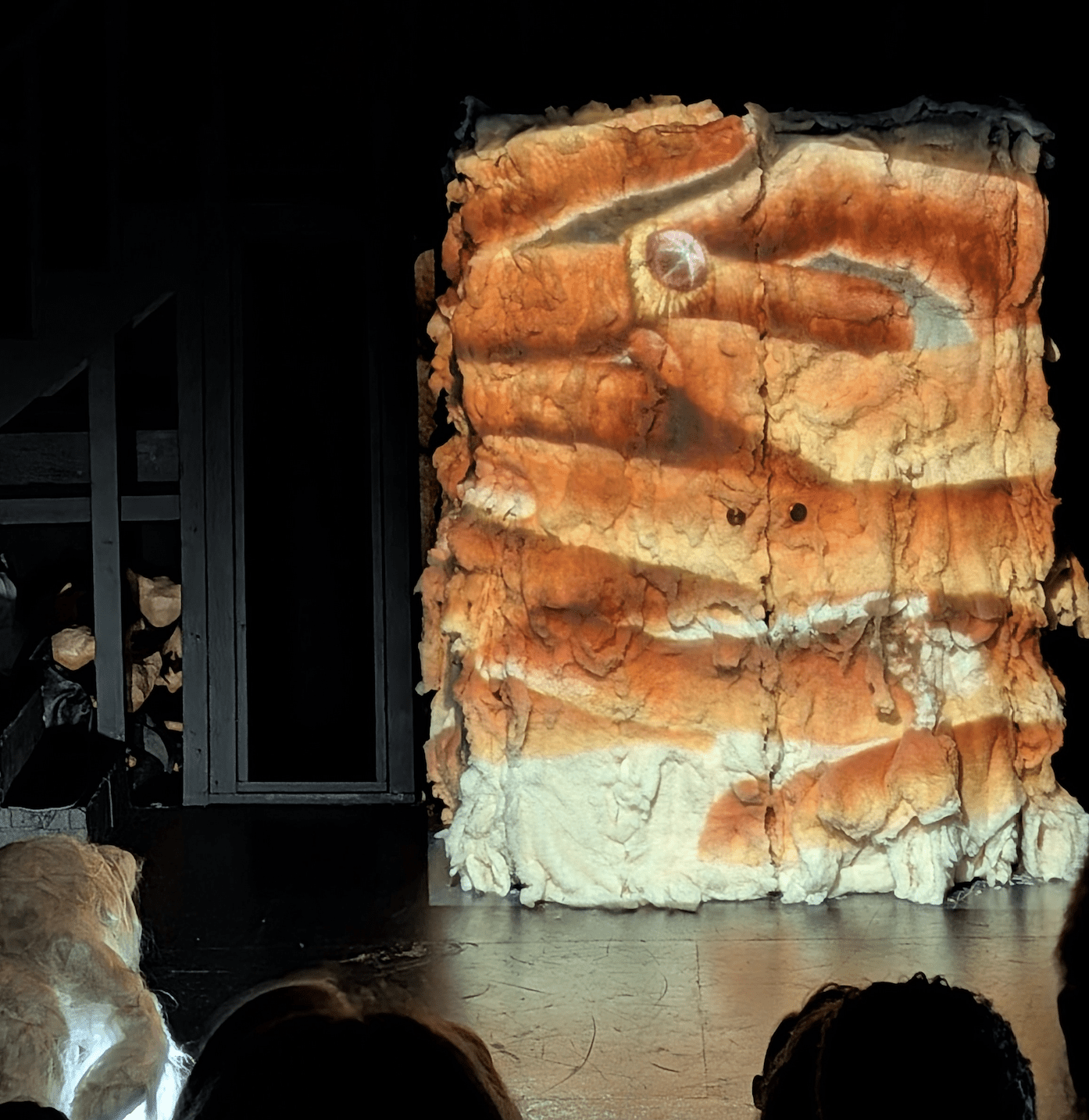
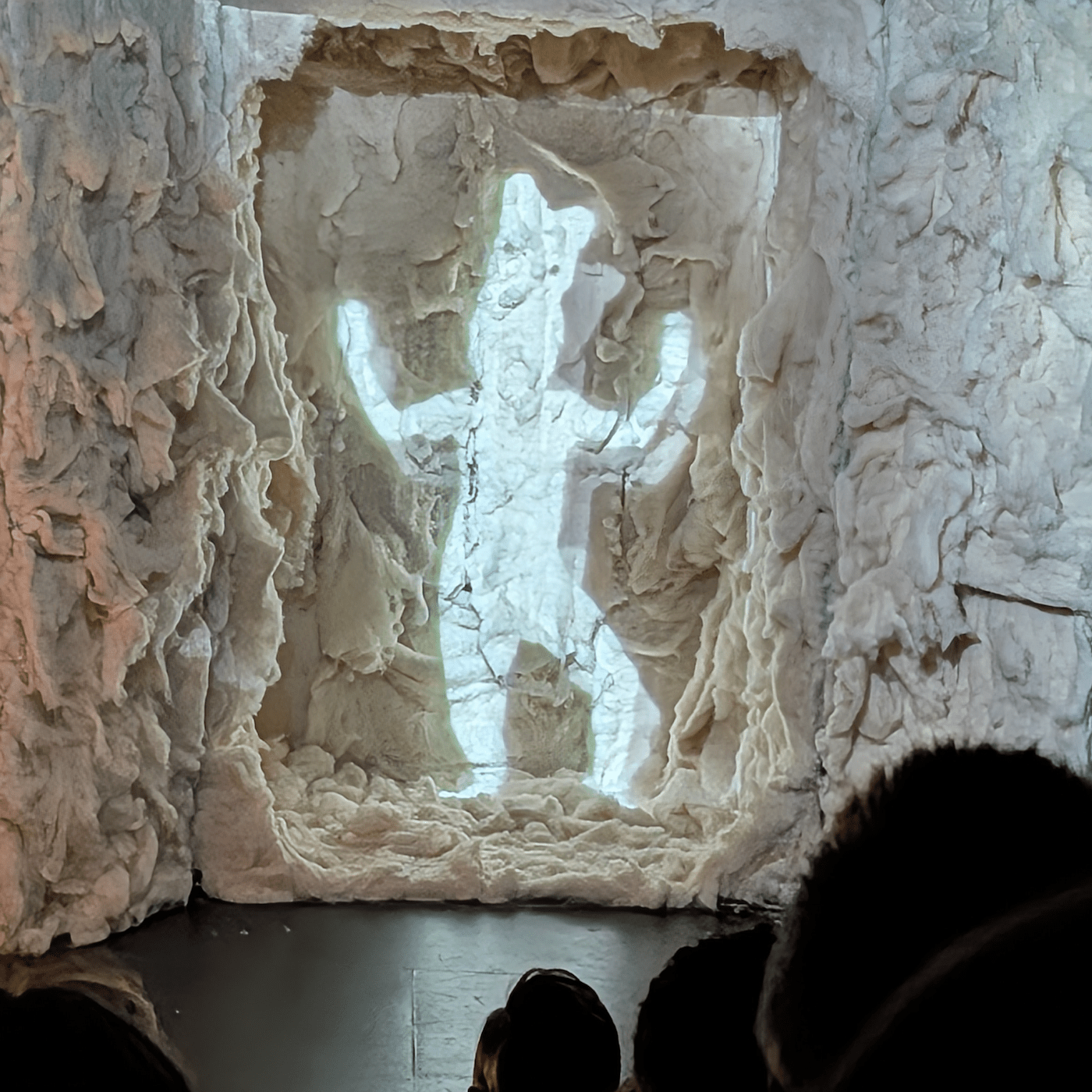
Sara Sachs, Lying, New Theater Hollywood, Los Angeles, June 3–6, 2026. Photos by Barlo Perry.
